Solo travel in Greece – a complete guide for joining a group
Greece is one of the easiest countries in Europe for a first solo trip. Distances are short, ferries and buses link most places you will want to see, English is widely spoken in tourist areas, and the culture of long, shared meals means you rarely feel out of place eating alone. From the ancient sites of Athens to whitewashed Cycladic villages, the monasteries of Meteora and the gorges of Crete, there is a lot of variety in a small area.
A group trip helps most with the logistics that can be tiring on your own: matching ferry timetables between islands, finding transport to mountain villages, and getting into popular sites at quieter times. It also gives you people to share a taverna table with, which is how Greek food is meant to be eaten – many small plates ordered for the middle of the table.
How to get to Greece from the USA, UK, Canada, Australia…
Information checked: October 2026 · how we check
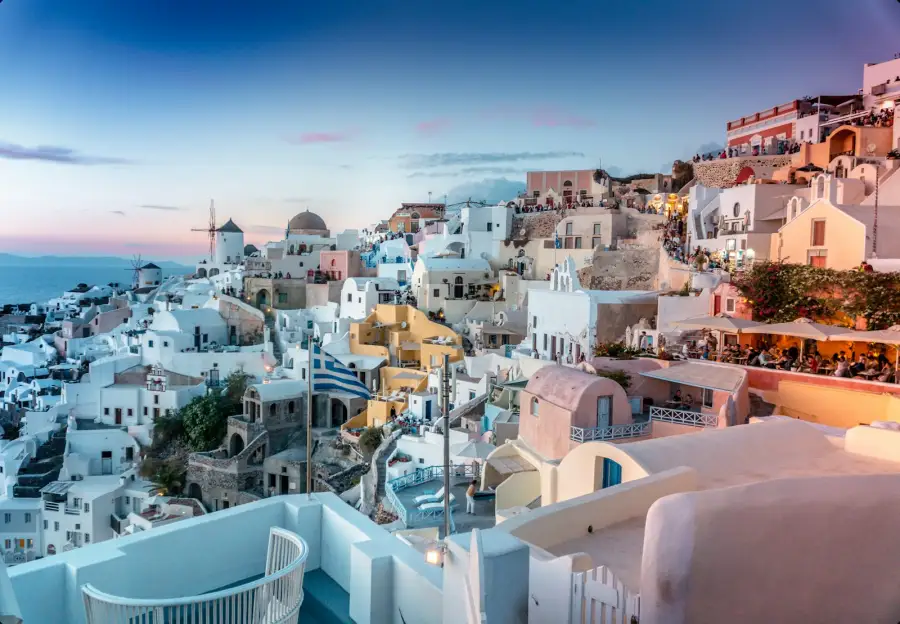
Places to visit in Greece as a solo traveller
A full guide for each: what to see, where to stay, safety and how many days.
Greece month by month
Typical weather and what each month is like for a group trip. Every year is different – check the forecast before you go.
Quiet and cheap in Athens and Thessaloniki, but many island hotels and tavernas are closed.
Carnival season (Apokries) can bring street parties, but ferry schedules are reduced.
Wild flowers start in the countryside; good for Athens and the Peloponnese, still early for islands.
Green landscapes and fewer crowds; Orthodox Easter often falls in April and is a major family celebration.
One of the best months for walking, sightseeing and island hopping before peak season.
Warm sea and long days; islands get busier towards the end of the month.
Peak season with high prices and heatwaves possible; plan sightseeing early in the morning.
Busiest month, especially around the 15 August holiday; book ferries and rooms well ahead.
Excellent for swimming and hiking as crowds and prices start to fall.
Pleasant for Athens, Crete and walking; some smaller islands start closing late in the month.
Good for city breaks and museums, with low prices but limited island services.
Festive lights in the cities and mountain villages; most beach areas are in their off-season.
Great timeMixedTough (heat, rain or crowds)
Solo travel in Greece: the guide
Why join a group trip in Greece as a solo traveller
Travelling around Greece on your own is very doable, and many people do it happily. Still, there are a few things that a small group makes easier, especially on a first visit or if you want to cover both the mainland and the islands.
Ferries and timing
Island hopping looks simple on a map, but timetables change by season, some routes only run a few days a week, and strong summer winds (the meltemi) can delay or cancel sailings. In a group, someone else watches the schedules and rearranges plans when the weather changes. On your own, a missed connection can cost a day.
Places that are hard to reach alone
Mountain areas such as Zagori in Epirus, the inland villages of Crete or the quieter corners of the Peloponnese are much easier with shared transport. Buses exist, but they may run once or twice a day. A group trip lets you see these places without hiring a car on your own or paying for long taxi rides.
Company at the table
Greek meals are social. Tavernas serve mezedes – small dishes for sharing – and portions of grilled fish or meat are often sold by the kilo. Eating as a group means you can try far more dishes and split the bill fairly. Many solo travellers say the shared dinners are the part of the trip they remember most.
Context at ancient sites
The Acropolis, Delphi, Mycenae, Olympia and Knossos are impressive on their own, but they make far more sense with someone explaining what you are looking at. Licensed guides in Greece have a formal qualification, and a good one brings the ruins to life.
Who it suits
Group trips work well for first-time solo travellers, people over 50 who prefer not to manage every booking, women who would like company in the evenings, and anyone short on time who wants a mix of islands and mainland in one or two weeks. If you are confident and flexible, you can also combine a few days with a group and a few days of independent travel.
Best time to visit Greece
For most solo travellers, the best time to visit Greece is late April to June and September to mid-October. The weather is warm, the sea is swimmable from about June, ferries run frequently and prices are lower than in July and August.
Spring (April–June)
Spring brings wild flowers, green hills and comfortable temperatures for walking around ancient sites, which have little shade. Orthodox Easter is the biggest celebration of the year, with candlelit processions on Saturday night and lamb roasting on Sunday. It is a memorable time to be in Greece, but transport and rooms can be busy as Greeks travel to their home villages. The date changes every year, so check it when planning.
Summer (July–August)
High summer is hot, busy and expensive, especially on Santorini, Mykonos and the main Ionian islands. Heatwaves above 38°C happen, and some archaeological sites may change opening hours in extreme heat. The meltemi wind blows across the Aegean, making some crossings rough. Summer is still great for beach life and nightlife, but book ferries and rooms early and plan sightseeing for the early morning.
Autumn (September–October)
September is many people's favourite month: the sea is at its warmest, crowds thin out after the first week or two and harvest time brings wine and olive festivals in rural areas. By late October, smaller islands begin to close for the winter, while Crete and Rhodes stay mild for longer.
Winter (November–March)
Winter is quiet and good value for Athens, Thessaloniki, Nafplio and Meteora. Expect rain on some days and snow in the mountains, where villages become cosy ski and hiking bases. Island ferries run less often and many seasonal hotels and tavernas shut, so winter is better for a city and culture trip than for island hopping.
What to pack for Greece
Your Greece packing list depends on the season and on how many ferries you will take. As a rule, pack light: you may carry your bag up harbour steps, along cobbled lanes and on to crowded boats.
Clothing
- Light, breathable clothes for summer, plus a warmer layer for evenings and windy ferry decks.
- A scarf or sarong to cover shoulders, and at least one skirt or trousers that cover the knees, for monasteries and churches. At the Meteora monasteries the dress rules are taken seriously.
- Comfortable walking sandals and trainers with good grip – marble paths at ancient sites can be very slippery.
- Light hiking shoes if you plan to walk the Samaria Gorge, Zagori trails or island footpaths.
- A waterproof jacket from October to April.
Sun and sea
- High-factor sun cream, a wide-brimmed hat and sunglasses. Shade is rare at sites such as Delphi and Knossos.
- Water shoes for pebbly beaches and sea urchins.
- A refillable water bottle.
Practical items
- A Type C/F plug adapter if you come from outside continental Europe.
- A small day bag that closes securely for the Athens metro.
- Seasickness tablets if you are sensitive – Aegean crossings can be rough in summer winds.
- Some cash: card payments are common, but small tavernas, kiosks and village shops may prefer cash.
- Copies of your passport and travel insurance details.
Greece visa and entry requirements
Greece is part of the European Union and the Schengen area, so the standard Schengen rules apply. Entry rules depend on your nationality and can change, so always check your own government's travel advice and official EU sources before you book.
Who needs a visa
Citizens of EU and EEA countries and Switzerland can travel to Greece with a valid passport or national ID card. Many other nationalities, including UK, US, Canadian, Australian and New Zealand passport holders, can usually visit the Schengen area visa-free for short stays of up to 90 days in any 180-day period. That 90-day limit covers all Schengen countries together, not each one separately. Other nationalities may need a Schengen visa, applied for in advance through a Greek embassy or consulate.
The EU Entry/Exit System (EES)
The EU Entry/Exit System is a digital system that records the entries and exits of non-EU travellers at Schengen external borders, including fingerprints and a facial image, and replaces passport stamping. It was introduced in stages. If you are a non-EU visitor, expect to register at your first border crossing, which can take a little longer. Check the current situation on the official EU travel site, travel-europe.europa.eu, before you go.
ETIAS travel authorisation
ETIAS is a planned online travel authorisation for visa-exempt visitors to many European countries, including Greece. Once it starts, travellers who do not need a visa will have to apply online before travelling. It had not started at the time of writing, and its start date has moved more than once, so check the timing and the official application route on travel-europe.europa.eu. Use only the official EU website – unofficial sites may charge extra fees.
Passport validity and other checks
Under Schengen rules, non-EU visitors usually need a passport issued within the last 10 years and valid for at least three months after the date you plan to leave. Border officers may also ask about your accommodation, return ticket and funds. Check the details for your nationality on your government's travel advice pages.
How much does a trip to Greece cost?
Greece uses the euro. Costs vary a lot by place and season: Athens, Crete and the mainland are usually cheaper than Santorini or Mykonos, and the same room can cost twice as much in August as in May. The prices below are approximate 2026 ranges – check before you go.
Greece budget per day
A budget traveller using hostels, buses, deck-class ferries and simple food such as gyros and bakery pies can expect around €45–70 per day, more on the most popular islands in summer. A mid-range traveller staying in private rooms or small hotels, eating sit-down taverna meals and taking a few paid tours should budget around €100–170 per day.
Where the money goes
- Accommodation: the biggest cost. Solo travellers pay a premium for single rooms, and singles are often priced like doubles.
- Ferries: conventional ferries are cheaper and slower; high-speed boats cost more. A few long hops add up quickly.
- Entry tickets: major sites such as the Acropolis have become noticeably more expensive. Some sites offer free entry on certain days in the low season, and discounts for EU students and young people.
- Food: eating out is good value away from the main tourist streets, and a shared taverna meal with wine is one of the best-value pleasures in Greece.
Saving money as a solo traveller
Travel in May, June or September, choose islands such as Naxos, Paros, Crete or the smaller Cyclades over the most famous names, use KTEL buses on the mainland, and eat lunch as your main meal. In a group, the cost of private transfers, guides and shared dishes is split, which can make single travel closer to the price per person that couples pay.
Is Greece safe for solo and female travellers?
Greece is generally considered a safe and welcoming country for solo travellers, including women travelling alone. Violent crime against visitors is uncommon. As anywhere, the main risks are petty theft, accidents and a few situations where a little care helps.
Petty theft and scams
Pickpocketing happens on the Athens metro (especially between the city centre and Piraeus), at busy markets such as Monastiraki and on crowded buses. Keep your phone and wallet in a closed bag in front of you. Some areas around Omonia can feel uncomfortable late at night; stay in well-lit, busy streets or take a taxi. In nightlife areas, watch for inflated bar bills and be cautious when strangers invite you to a particular bar.
Tips for women travelling alone
- Unwanted attention is usually limited to comments or persistent flirting; a firm, clear no is normally enough.
- On party islands, keep an eye on your drink and arrange how you will get back to your accommodation before you go out.
- Choose accommodation with good reviews from other solo women, and on islands, check how far it is from the port and the main village.
- Use official taxis or ride-hailing apps rather than accepting lifts.
Road, sea and heat
Scooter and quad bike accidents are one of the most common causes of injury for visitors, especially on island roads with sharp bends and loose gravel. Only rent if you are experienced and properly licensed, and always wear a helmet. Check that your insurance covers it. Summer heatwaves can be dangerous: drink water, avoid hiking in the middle of the day and follow official advice. Wildfires can break out in hot, dry, windy weather – if you receive an emergency alert on your phone, follow its instructions.
Emergency number
The European emergency number 112 works in Greece and can connect you to police, ambulance and fire services. There is also a tourist police service in many tourist areas.
Getting around Greece
Getting around Greece is part of the experience. The main choices are ferries, buses, a limited rail network, domestic flights and, in some places, a hire car.
Ferries
Ferries are the backbone of island travel. The main ports near Athens are Piraeus (for most of the Cyclades, Crete and the Dodecanese) and Rafina and Lavrio (often handy for some Cycladic islands). Conventional ferries are slower, cheaper and more stable in rough seas; high-speed catamarans save time but can be cancelled in strong winds. Book ahead in summer, arrive at the port early and check your departure point, because large ports have several gates.
Buses
Regional KTEL buses connect Athens with towns all over the mainland and run on the larger islands, such as Crete, Naxos and Corfu. They are affordable and fairly reliable, but timetables can be posted only locally or online in Greek, so ask at your accommodation. On small islands, buses may meet ferries or run only a few times a day.
Trains and city transport
The rail network is limited. The main line links Athens and Thessaloniki, with a branch towards Kalambaka for Meteora. In Athens, the metro, tram and buses are easy to use and cover the airport, the centre and Piraeus. Thessaloniki has its own metro.
Domestic flights
Flights connect Athens with Thessaloniki, Crete and many islands, and can save a long ferry trip. In summer they fill quickly, and cheap fares go early.
Driving
Greeks drive on the right. A car is useful in Crete, the Peloponnese and the mountains, but driving styles can be assertive and roads narrow. Non-EU drivers may need an International Driving Permit – check before you rent.
Culture, etiquette and food
Greek culture is warm, direct and centred on family, food and conversation. Hospitality, called filoxenia, is a point of pride, and in villages you may be offered a coffee, a sweet or a glass of something homemade.
Etiquette tips
- Dress modestly in churches and monasteries: covered shoulders and knees, and at Meteora women may be asked to wear a skirt over trousers (wraps are often provided at the entrance).
- Greeks often eat late: lunch from about 14:00 and dinner from 21:00 or later.
- Nodding and head movements can be confusing: a slight upward nod with a click of the tongue often means no. Yes is ne.
- Avoid the open-palm gesture pushed towards someone's face – it is an old insult.
- In many places, used toilet paper goes in the bin, not the toilet, because the pipes are narrow. Follow the signs.
Festivals and holidays
Orthodox Easter is the biggest holiday of the year. Other important dates include 25 March (Independence Day), 15 August (the Dormition of the Virgin Mary, with village festivals called panigiria) and 28 October (Ochi Day, with parades). The carnival season before Lent is lively, with the largest celebrations in Patras.
What to eat
Greek food is simple, seasonal and built around olive oil, vegetables, herbs, cheese and grilled meat or fish. Try:
- Souvlaki and gyros – grilled or rotisserie meat wrapped in pita, the classic cheap meal.
- Horiatiki – the village salad with tomato, cucumber, onion, olives and feta.
- Moussaka and pastitsio – baked dishes found in traditional tavernas.
- Spanakopita and tiropita – spinach and cheese pies from bakeries, ideal for breakfast on the go.
- Dakos in Crete – barley rusk topped with tomato and soft cheese.
- Loukoumades – small fried dough balls with honey.
Ouzo and tsipouro are served with small plates of meze. In summer, iced coffee such as freddo espresso is everywhere.
Meeting other travellers in Greece
Greece is an easy place to meet people, especially from May to October when islands fill with travellers from all over the world.
Where solo travellers meet
- Hostels in Athens and on popular islands often have rooftop bars, walking tours or shared dinners. Even if you book a private room, a sociable hostel can be a good base.
- Ferries: long crossings are a natural place to chat, especially on the outer deck. Travellers often swap tips on islands and rooms.
- Day trips and activities: boat trips around Milos, cooking classes in Crete, wine tastings on Santorini or hikes through the Samaria Gorge put you with other people for a day.
- Hiking trails: island footpaths on Naxos, Andros and Sifnos and the trails of Zagori attract friendly, outdoor-minded travellers.
Joining a group trip
If you want company for the whole journey, a small-group trip is the most reliable option. Look for group size, the age range a trip is aimed at, the single supplement (or whether room-sharing is offered), how much free time is included and how ferries are handled if the weather changes. Some trips focus on islands and beaches, others on ancient history, food or walking, so choose by interest as well as by route.
Meeting locals
Greeks are often curious and talkative. Learning a few words – kalimera (good morning), efcharistó (thank you), parakaló (please, or you are welcome) – goes a long way. Evening walks, called volta, along the seafront or main square are a good time to feel part of local life, and village festivals in summer welcome visitors to join the food and dancing.
Greece packing list
- Light, breathable summer clothing
- A warm layer for evenings and windy ferry decks
- Scarf or sarong to cover shoulders in churches
- Skirt or trousers that cover the knees for monasteries
- Walking sandals with good grip for marble paths
- Trainers or light hiking shoes for gorges and island trails
- High-factor sun cream
- Wide-brimmed hat and sunglasses
- Swimwear and a quick-dry towel
- Water shoes for pebbles and sea urchins
- Refillable water bottle
- Type C/F plug adapter
- Small anti-theft day bag for the Athens metro
- Seasickness tablets for summer crossings
- Waterproof jacket (October to April)
- Some euro cash for kiosks and village tavernas
- Copies of passport and travel insurance
The general list for any trip: solo travel packing list.
Typical costs in Greece
| What | Basic | Mid-range |
|---|---|---|
| Hostel dorm bed | €20–40 (higher on top islands in summer) | €70–150 (private room or small hotel) |
| Gyros or souvlaki pita | €3–5 | €4–6 |
| Taverna dinner | €12–18 | €25–45 with wine |
| Coffee | €2–3 | €3–5 |
| Athens metro ticket | around €1–2 | around €9–10 airport ticket |
| Ferry Piraeus to a Cycladic island | €40–70 (conventional, deck) | €70–120 (high-speed) |
| Regional KTEL bus | €2–10 short trips | €20–35 long routes |
| Major archaeological site entry | €10–20 | €20–30 (Acropolis, depending on season) |
Approximate prices for 2026 in euros. Prices change – check before you go. More: how to budget a solo trip.
Greece itineraries: 5, 7, 10 and 14 days
Routes that work for a first visit – on your own or as the shape of a group trip.
Greece in 5 days: Athens and one Cycladic island
Athens – Naxos – Athens
- Day 1Arrive in Athens
Settle in near Plaka or Koukaki and walk up to Filopappou Hill for sunset views of the Acropolis.
- Day 2Acropolis and Acropolis Museum
Visit the Acropolis as early as possible, then the museum in the heat of the day. Evening in Psyrri for food.
- Day 3Ferry to Naxos
Morning ferry from Piraeus. Walk the old town and watch sunset at the Portara, the marble gateway by the harbour.
- Day 4Inland Naxos
Explore mountain villages such as Halki and Apiranthos, or spend the day on a long sandy beach.
- Day 5Return to Athens
Ferry back to Piraeus and onward to the airport, allowing a buffer in case of delays.
Greece in 7 days: Athens, Delphi, Meteora and the Peloponnese
Athens – Delphi – Meteora – Nafplio – Athens
- Day 1Arrive in Athens
Evening walk through Plaka and Anafiotika, the little island-style quarter below the Acropolis.
- Day 2Ancient Athens
Acropolis, Ancient Agora and the Acropolis Museum, with a rooftop dinner in the evening.
- Day 3Delphi
Travel to Delphi, the ancient sanctuary of Apollo on the slopes of Mount Parnassus, and stay in the village.
- Days 4–5Meteora
Visit the monasteries on their rock pillars, with time for a sunset viewpoint and a walk on the old monk paths.
- Day 6Nafplio
Head south to Nafplio, a pretty seaside town, with a stop at ancient Mycenae or the theatre of Epidaurus.
- Day 7Back to Athens
Morning swim or castle climb in Nafplio, then return to Athens for your flight.
Greece in 10 days: Athens and Cyclades island hopping
Athens – Paros – Naxos – Santorini – Athens
- Days 1–2Athens
The Acropolis, museums and neighbourhood food tours in Athens.
- Days 3–4Paros
Base yourself in Naoussa or Parikia for beaches, cafés and an easy walk on the old Byzantine path.
- Days 5–7Naxos
Short ferry to Naxos for mountain villages, local cheese and long beaches with fewer crowds.
- Days 8–9Santorini
Walk the caldera path from Fira to Oia, visit the excavations at Akrotiri and see the volcanic beaches.
- Day 10Return to Athens
Fly or take the ferry back to Athens, depending on your onward flight time.
Greece in 2 weeks: mainland highlights, Crete and the islands
Athens – Delphi – Meteora – Athens – Naxos – Santorini – Crete
- Days 1–2Athens
Ancient sites, museums and the lively streets of Monastiraki and Psyrri.
- Days 3–5Delphi and Meteora
A loop to the sanctuary of Delphi and the monasteries of Meteora, returning to Athens.
- Days 6–8Naxos
Ferry to Naxos for beaches, hiking and village tavernas.
- Days 9–10Santorini
Caldera views, a sunset boat trip and wine tasting among volcanic vineyards.
- Days 11–13Crete
Ferry to Heraklion for Knossos, then Chania's old harbour and, in season, a hike through the Samaria Gorge.
- Day 14Depart from Crete
Fly home from Heraklion or Chania, or connect via Athens.
Where to go in Greece
The capital combines world-famous ancient sites with lively neighbourhoods, rooftop bars and an easy metro, so it is a gentle start for a solo trip.
Classic whitewashed islands linked by ferry; Naxos and Paros are relaxed and good value, while Santorini is famous for caldera views.
Greece's largest island has its own food culture, Minoan palaces, mountain villages and gorges, and enough variety to fill a week or more.
Monasteries perched on giant rock pillars near Kalambaka, reachable by train and good for walking and photography.
The ancient sanctuary of Apollo in a dramatic mountain setting, an easy addition to a mainland loop.
Ancient sites, castles and quiet beaches, with Nafplio as a walkable and safe-feeling base.
Greece's second city has a big student population, Byzantine churches, a long seafront and some of the country's best food.
Stone villages, arched bridges and the Vikos Gorge in the north-west mountains, ideal for hikers who prefer a group for transport.
Group trips in Greece for solo travellers
We have no confirmed group departure in Greece yet. We only list real dates.
Host your own group trip to GreeceHow to choose a group tripSingle supplement explained
Solo travel in Greece: questions
Is Greece good for solo travel?
Yes. Greece has good ferry and bus links, plenty of hostels and small hotels, and a relaxed, social culture. Tourist areas are used to solo visitors, and it is easy to combine independent days with organised trips.
Is Greece safe for solo female travellers?
Greece is generally considered safe for women travelling alone. The usual precautions apply: watch for pickpockets in Athens, keep an eye on your drink in nightlife areas and use official taxis late at night. Check your government's travel advice for current information.
What is the best time to visit Greece?
Late April to June and September to mid-October usually offer the best balance of warm weather, open services and fewer crowds. July and August are hot and busy, while winter suits city breaks better than island hopping.
How much money do I need per day in Greece?
As a rough guide, budget travellers spend around €45–70 per day and mid-range travellers around €100–170. Popular islands in summer cost more. These are approximate figures, so check current prices before you go.
Do I need a visa for Greece?
Greece follows Schengen rules. Many nationalities can visit visa-free for up to 90 days in any 180-day period, but non-EU visitors are now registered in the EU Entry/Exit System and will need ETIAS once it starts. Check travel-europe.europa.eu and your government's travel advice.
How many days do I need in Greece?
Seven days is enough for Athens plus either a mainland loop or one or two islands. Ten days to two weeks lets you combine the mainland, a few Cycladic islands and Crete without rushing.
Is island hopping hard to do alone?
It is manageable, but timetables vary by season and strong winds can cancel fast boats. Build in spare time, book key ferries ahead in summer, and avoid planning your last ferry on the day of your flight home.
What should I wear in Greece?
Light, casual clothes are fine in most places. Bring something to cover your shoulders and knees for churches and monasteries, comfortable shoes with grip, and a warm layer for evenings and ferry decks.
Can I drink tap water in Greece?
Tap water is generally drinkable in Athens and most mainland cities. On some islands the water is desalinated or not recommended for drinking, so ask locally and use bottled or filtered water where advised.
Greece for solo travellers, groups and women: more questions
Is Greece a good first solo trip?
Greece is a good first solo trip: it is generally safe and welcoming, English is widely spoken in tourist areas, and the islands are full of travellers from May to October. Athens plus one island such as Naxos is an easy introduction. The main challenge is ferry timetables, which change by season.
Is 5 days enough for Greece on your own?
Five days is enough for Athens and one island, such as Naxos. A week suits the classical mainland (Delphi, Meteora and Nafplio), and 10 days lets you island-hop through Paros, Naxos and Santorini. With two weeks you can combine the mainland, the Cyclades and Crete.
Is Greece expensive for solo travellers?
Greece costs roughly €45–70 a day on a budget and €100–170 a day mid-range (approximate, check before you go). Prices rise on the most popular islands in summer, and ferries from Piraeus to the Cyclades cost around €40–70 on conventional boats. Gyros pitas at around €3–5 and shared taverna meals help keep food costs down.
Where do solo travellers stay in Greece?
Hostels in Athens and on popular islands often have rooftop bars, walking tours or shared dinners, and you can book a private room and still enjoy the social side. On islands, check how far your accommodation is from the port and the main village. Choose places with good reviews from other solo women if you travel alone.
How do I meet people travelling solo in Greece?
Ferries are a natural place to chat, especially on the outer deck, and hostels make it easy to find company. Boat trips around Milos, cooking classes on Crete, wine tastings on Santorini and the Samaria Gorge hike put you with other people for a day. Island footpaths on Naxos, Andros and Sifnos and the trails of Zagori attract friendly, outdoor-minded travellers.
Should a solo traveller join a group tour in Greece?
Greece is very doable alone, but a group helps with ferries, which can be delayed or cancelled by the strong summer meltemi winds. It also makes mountain areas such as Zagori, inland Crete and the Peloponnese easier to reach without hiring a car. And a guide brings ancient sites such as Delphi, Mycenae and Knossos to life.
What is the best group trip in Greece for solo travellers?
Island-hopping trips through the Cyclades (for example Paros, Naxos and Santorini or Milos) are the most popular choice. History lovers often prefer a classical mainland route from Athens to Delphi, Meteora and the Peloponnese, and walkers choose trips in Zagori or Crete. Check how a trip handles ferry changes in bad weather.
How big are group tours in Greece?
It varies. Small-group trips often have somewhere around 10–16 people, which works well on ferries and in island guesthouses, while coach tours of the mainland can carry 30 or more. Always check the maximum group size.
How do I avoid the single supplement in Greece?
Ask whether the group offers room sharing with another solo traveller of the same gender. Travelling independently, hostels and small family-run rooms are cheaper than hotel singles, especially in May, June, September and October. Prices on the top islands are highest in July and August.
Is Athens safe for women travelling alone?
Athens is generally safe for women travelling alone, and violent crime against visitors is uncommon. Pickpocketing happens on the metro between the centre and Piraeus and around Monastiraki, and some areas around Omonia can feel uncomfortable late at night. Stay on busy, well-lit streets, and be cautious if a stranger invites you to a particular bar.
Do women need to cover up to visit Meteora and Greek churches?
Yes, at the Meteora monasteries women are usually expected to wear a skirt below the knee and cover their shoulders, and wraps are often available at the entrance. In other churches and monasteries, covered shoulders and knees are respectful. On beaches and in island towns, casual summer clothes are fine.
Are there women-only group tours in Greece?
Yes, some operators run women-only trips in Greece, with themes such as island-hopping, walking, yoga or food. Many women also travel the islands independently because it is easy to meet people. Compare group size, room sharing and how ferries are handled.
Can a woman go out alone at night in Greece?
Many women go out alone in Greek towns and islands in the evening, when village squares and harbours are busy. On party islands, keep an eye on your drink and arrange how you will get back before you go out. Use official taxis or ride-hailing apps rather than accepting lifts.
Is it safe to rent a scooter alone on the Greek islands?
Scooter and quad bike accidents are one of the most common causes of injury for visitors, especially on island roads with sharp bends and loose gravel. Only rent if you are experienced, properly licensed and wearing a helmet, and check your insurance covers it. Local buses, taxis and walking paths are safer alternatives.
Which Greek island is best for solo travellers?
Naxos is a good all-round choice: relaxed, well connected by ferry and great for walking. Paros is lively and social, Milos is known for its boat trips and Crete is big enough for hiking, food and beaches. Santorini is famous but busy and often pricier, and popular with couples.
People also search for
solo travel greece greece solo female travel is greece safe for women travelling alone greece group tours for solo travellers greek island hopping group tour greece itinerary 7 days solo best greek island for solo travellers women only tours greece is athens safe for solo female travellers greece budget per day solo greece tour single supplement naxos solo travel first solo trip greece solo traveling greece
Official sources to check before you go
- UK Foreign Office travel advice: Greece
- US State Department: Greece travel information
- Australian Government Smartraveller
- EU official site for EES and ETIAS
Entry rules, safety advice and prices change. This guide is general information, not legal or medical advice – always check your own government's travel advice.

Also loved by solo travellers
Add Morocco to your list
Planning solo travel in Morocco? Best time to go, visa basics, budget per day, safety tips for women, packing list and 5 to 14-day itineraries.


Travel solo. Explore together.
Thinking about Greece with a group?
Ask us anything about travelling solo with a group, or tell us your dates. When a real group trip matches, we will let you know – no spam, no invented offers.
- 1Tell us the country and monthOr just ask a question – packing, safety, budget.
- 2Get an honest answer by emailFrom people who plan group trips, not a robot.
- 3Join a real departure – or notYou only book when a date suits you. Book now, pay later.