Solo travel in Jordan – a complete guide for joining a group
Jordan is a small country with a big list of experiences, which makes it ideal for a first solo trip to the Middle East. In one week you can walk through the Siq to Petra's Treasury, sleep in a Bedouin camp in Wadi Rum, float in the Dead Sea and explore Roman Jerash. Jordanians are known for their hospitality, English is widely spoken in tourist areas and the main sights are well organised.
Public transport is limited, though, and many highlights are far from bus routes, which pushes solo travellers towards expensive private drivers. A small group trip shares those transport costs, adds local guides at Petra and in the desert, and gives you company for long evenings in camp, making Jordan both easier and more affordable on your own.
How to get to Jordan from the USA, UK, Canada, Australia…
Information checked: October 2026 · how we check
Places to visit in Jordan as a solo traveller
A full guide for each: what to see, where to stay, safety and how many days.
Jordan month by month
Typical weather and what each month is like for a group trip. Every year is different – check the forecast before you go.
Petra and Amman can be cold and wet, but the Dead Sea and Aqaba stay mild.
Quiet sites and clear days, though desert camps in Wadi Rum are very cold after dark.
Spring flowers appear in the north and Dana, and walking conditions at Petra are excellent.
One of the best months for hiking, Petra and Wadi Rum, and therefore busy.
Warm and settled; start early for long walks at Petra.
Hot in the lowlands; higher areas like Amman and Petra are more comfortable.
Plan sightseeing at dawn and dusk; Aqaba's Red Sea is good for snorkelling.
The hottest month, with Wadi Rum and the Dead Sea best visited early and late in the day.
Heat eases late in the month and canyon hikes such as Wadi Mujib may still be open; check.
Warm days and cool desert nights make October a favourite month for group trips.
Pleasant for Petra and the Jordan Trail, with the first rains possible late in the month.
Short days and cold nights in Petra and Wadi Rum, but quieter sites and mild weather in Aqaba.
Great timeMixedTough (heat, rain or crowds)
Solo travel in Jordan: the guide
Why join a group trip in Jordan as a solo traveller
Jordan's main sights lie along a north to south line from Jerash and Amman to Madaba, the Dead Sea, Dana, Petra, Wadi Rum and Aqaba. The distances are manageable, but public buses connect only some of these places, and often just once or twice a day. Many solo travellers end up hiring a driver or a car, which is expensive for one person. A group trip shares these costs and keeps the route smooth.
Better days at Petra and in Wadi Rum
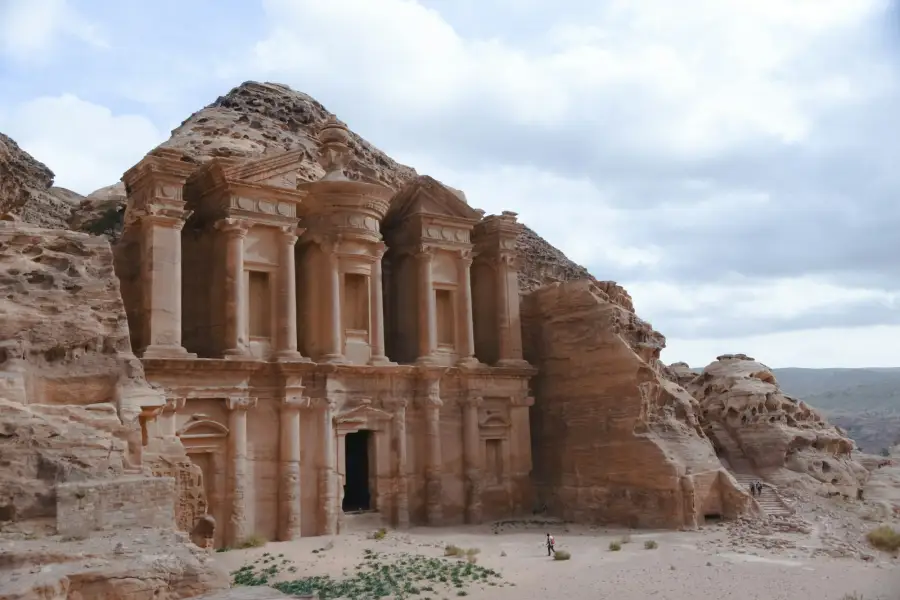
Petra is vast, and a first visit can be overwhelming. A local guide explains the Nabataean history, points out tombs and carvings you would otherwise miss and helps you plan the walk to the Monastery or the High Place of Sacrifice. In Wadi Rum, jeep tours, sunset viewpoints and camp stays are organised by local Bedouin families, and joining with others makes jeep tours cheaper and more social.
Company and comfort
Evenings in Jordan often mean dinner in a hotel or camp, and in the desert, sitting around a fire with tea under the stars. Sharing these moments is part of the fun. For women travelling alone, a group also means less unwanted attention and no need to arrange late transport.
- Room sharing: ask whether solo travellers can share with another participant or pay a single supplement, especially in desert camps.
- Activity level: Petra involves a lot of walking and steps, and hikes such as Wadi Mujib or Dana need reasonable fitness.
- What is included: check whether the Jordan Pass, Petra entry, Wadi Rum jeep tour and border fees are covered.
Jordan also works well as a combined trip: many travellers spend a few independent days in Amman before or after a group itinerary.
Best time to visit Jordan
The best time to visit Jordan is usually spring, from March to May, and autumn, from late September to November. Days are warm without being too hot, nights in Petra and Wadi Rum are cool, and hiking conditions are at their best. These are also the busiest months, so popular camps and hotels fill up.
Summer
June to August is hot, particularly in the Jordan Valley, at the Dead Sea, which lies far below sea level, and in Aqaba. Amman and Petra are higher, so they feel more comfortable, but walking in Petra at midday is tiring. Start at opening time and rest in the afternoon. Summer is a good time for water hikes in the canyons, though some trails open only in certain months.
Winter
December to February can be surprisingly cold. Amman and Petra see rain and sometimes snow, and Wadi Rum nights can be near freezing. Flash floods are a risk in the canyons after heavy rain, and some routes close. On the plus side, the sites are quieter and Aqaba and the Dead Sea remain mild for a winter break.
Ramadan and holidays
During Ramadan, which moves about 11 days earlier each year, sites stay open but restaurants may close in the daytime outside tourist areas, and eating, drinking and smoking in public during daylight should be avoided. Evenings are lively after iftar. The Eid holidays that follow are busy with domestic travellers.
Also check for events around Jerash, which hosts a cultural festival in summer in many years, and plan clear nights in Wadi Rum around the moon if you want to see the stars at their brightest.
What to pack for Jordan
Your Jordan packing list should cover big temperature changes: warm days at the Dead Sea, cool evenings in Amman and cold nights in the desert, sometimes all in one trip. Jordan is relatively relaxed by regional standards, but modest clothing is still the norm.
Clothing
- Light, breathable trousers or long skirts and tops that cover the shoulders.
- A warm fleece or jacket for Petra mornings and Wadi Rum nights, even in spring and autumn.
- A scarf for women to cover hair when visiting mosques, such as the King Abdullah I Mosque in Amman.
- Swimwear for the Dead Sea and Aqaba, with a cover-up for walking to and from the water.
Footwear
Petra involves many kilometres of walking on sand, rock and steep steps, with several hundred rock-cut steps on the climb to the Monastery. Bring well broken-in walking shoes or light boots. For canyon water hikes like Wadi Mujib, bring water shoes or sandals with grip and quick-drying clothes.
Practical items
- A universal plug adapter, as socket types vary.
- Sun protection: hat, sunglasses and high-factor sunscreen.
- A head torch for desert camps and Petra by Night, when it runs.
- A dry bag for your phone on water hikes.
- Old flip-flops for the Dead Sea, where the shore can be rough and salty.
- A refillable bottle; many people drink bottled or filtered water.
Avoid shaving the day before swimming in the Dead Sea, as the salty water stings small cuts, and keep it away from your eyes.
Jordan visa and entry requirements
Most visitors need a visa for Jordan, but for many nationalities it is easy to obtain. Rules depend on your nationality and on how you enter, and they can change, so check before you travel.
Visa on arrival
Many nationalities, including UK, EU, US, Canadian and Australian passport holders, can usually get a single-entry tourist visa on arrival at Queen Alia International Airport in Amman and at some land and sea borders. The fee is paid in Jordanian dinars and can change.
The Jordan Pass
The Jordan Pass is an official tourism pass bought online before you arrive. It includes entry to Petra and many other sites, and for eligible visitors it can also cover the tourist visa fee, provided you stay in Jordan for a minimum number of nights. Conditions, prices and the list of sites included can change, so read the current details on the official Jordan Pass website before buying. For many visitors planning to see Petra, it is good value.
Land borders and Aqaba
Rules at land crossings differ, and not every border issues visas on arrival. Some crossings may close or change procedures at short notice depending on the regional situation. If you are arriving overland or by ferry, or flying into Aqaba, which has its own special economic zone rules, check the requirements for that specific route.
Passport and where to check
Your passport generally needs to be valid for at least six months from arrival. Check:
- Your government's travel advice for Jordan, such as the UK Foreign Office, the US State Department or Smartraveller in Australia.
- The Jordanian embassy or consulate in your country and official Jordanian government sources.
Government advice may also advise against travel near some border areas, so read it carefully when planning your route.
How much does a trip to Jordan cost?
Jordan is more expensive than many of its neighbours, mainly because of entry fees, transport and accommodation. All prices below are approximate 2026 ranges in euros; the local currency is the Jordanian dinar (JOD), which is worth more than one euro. Prices change, so check before you go.
Jordan budget per day
- Low budget, around €45–65 per day: hostels and simple guesthouses, falafel and local restaurants, public buses where they run, and shared jeep tours.
- Mid-range, around €90–150 per day: comfortable hotels, restaurant meals, some private transport and a better desert camp.
- Comfort, from around €200 per day: Dead Sea resorts, private drivers and premium camps.
Typical costs
A hostel dorm in Amman or Wadi Musa is often around €12–25, and a mid-range double around €60–110. A falafel sandwich or plate of hummus costs very little, while a full restaurant meal is often €10–25. Alcohol is available but relatively expensive.
Petra and the Jordan Pass
Petra is the biggest single cost. One-day tickets for international visitors staying overnight in Jordan are around 50 JOD, with slightly higher prices for two- and three-day tickets, and a much higher price for day visitors who do not stay overnight in the country. The Jordan Pass bundles Petra entry with other sites and, for eligible visitors, the visa fee, so for many people it saves money. Check current official prices before you buy.
Transport and tours
Taxis and drivers are the main extra cost for solo travellers. A private driver for a day trip from Amman to sites such as Jerash or the Dead Sea is much easier to afford when the cost is shared in a group. In Wadi Rum, jeep tours and overnight camps range from simple to luxury, from simple camps with dinner to comfort tents, so check what is included.
Is Jordan safe for solo and female travellers?
Jordan is generally seen as one of the more relaxed and stable countries in the region for visitors, and solo travellers, including many women, travel here regularly. Crime against tourists is relatively uncommon in the main areas. Because Jordan borders countries affected by conflict, government advice may change quickly and may advise against travel near certain borders, so read your government's latest travel advice before and during your trip.
Everyday precautions
- Keep valuables secure in busy places such as downtown Amman.
- Agree taxi fares in advance or ask the driver to use the meter; ride-hailing apps work in Amman.
- At Petra, agree prices for donkey, camel or horse rides before you start, and think about animal welfare when choosing.
- Take care in canyons and on desert hikes: check weather for flash flood risk and hike with a local guide where recommended.
Tips for women travelling alone
Many women find Jordan comfortable, but staring, comments or overly friendly behaviour do occur, including occasionally from men working in tourism. Dress modestly, especially outside Amman and Aqaba's hotels, sit in the back seat of taxis and be clear and firm if someone oversteps. Be cautious about invitations to go somewhere alone with a man you have just met, even in a friendly setting such as a desert camp or a Petra viewpoint. Choosing well-reviewed hotels and camps and joining a group for the desert section helps.
Health and the outdoors
Heat and dehydration are the main health risks, especially at Petra and the Dead Sea. Carry water, wear a hat and avoid hiking in the hottest hours. Do not put your head under the Dead Sea water and rinse off salt afterwards. Healthcare in Amman is good, while remote areas have fewer facilities, so travel insurance covering medical care and evacuation is important. Save local emergency numbers from your government's advice page.
Getting around Jordan
Getting around Jordan independently is possible, but it takes more planning than in many countries because there is no passenger railway and buses do not reach every site.
Buses and minibuses
Tourist coaches connect Amman with Petra (Wadi Musa) and Aqaba, usually once or twice a day, and are the most comfortable public option. Local minibuses link towns and leave when full; they are cheap but irregular, with few services in the late afternoon and on Fridays. Reaching places like Dana, Wadi Mujib or the Dead Sea resorts by public transport is difficult.
Taxis and drivers
- Yellow taxis work within cities, especially Amman; use the meter or agree a price.
- Servees are shared white taxis that run on fixed routes, cheap and used by locals.
- Private drivers are the most common way for visitors to cover the King's Highway or the Dead Sea Highway between sites.
- Ride-hailing apps work well in Amman.
Driving
Renting a car is popular. Roads are generally good, and the scenic King's Highway passes Madaba, Mount Nebo, Karak castle, Dana and Shobak on the way to Petra. City driving in Amman is busy and confusing, and you should watch for speed bumps and police checkpoints; carry your passport and documents.
Getting to Wadi Rum and Aqaba
Wadi Rum visitor centre is reached by road from Aqaba or Petra; from there, local Bedouin operators take you into the protected area by jeep. Aqaba has an airport with some international and domestic flights, and ferries link Aqaba with Egypt's Sinai, which some travellers combine with a trip to Jordan; check current schedules and border rules.
For solo travellers, the limited transport is one of the strongest reasons to join a group trip or shared tour for at least part of the journey.
Culture, etiquette and food
Jordan is a Muslim-majority country with a Christian minority, a strong Bedouin heritage and a large urban population in Amman. Hospitality is central: you may be offered coffee or tea, and accepting is polite.
Etiquette
- Dress modestly in towns, villages and religious sites; shorts and sleeveless tops are fine mainly in resort areas.
- Accept Arabic coffee with your right hand; gently shaking the small cup from side to side signals you have had enough.
- Ask before taking photos of people, particularly women and in Bedouin camps.
- Friday is the main day of rest, and many shops and offices close or open late.
- Avoid political or religious debates unless your host invites the conversation.
What to eat in Jordan
Mansaf is the national dish: lamb cooked in a sauce of fermented dried yoghurt called jameed, served on rice and flatbread, traditionally shared from a large platter at celebrations. Maqluba, meaning upside down, is a layered dish of rice, vegetables and meat turned out of the pot at the table. In Wadi Rum, many camps serve zarb, meat and vegetables cooked in an underground sand oven.
Everyday food includes falafel, hummus, foul, fresh flatbread with olive oil and zaatar, and mezze plates of salads and dips. For dessert, try knafeh, a warm cheese pastry soaked in syrup, popular in downtown Amman. Sweet mint tea and cardamom-scented Arabic coffee accompany most social moments.
Bedouin culture
Bedouin communities in Wadi Rum and around Petra have strong traditions of hospitality. Staying in a camp, sharing tea and listening to stories about the desert is one of the most memorable parts of a trip, but remember you are a guest in a working community.
History everywhere
Beyond Petra, Jordan has Roman cities like Jerash, Byzantine mosaics in Madaba, Crusader castles at Karak and Shobak, and desert castles east of Amman, giving the country a remarkable depth of history for its size.
Meeting other travellers in Jordan
Jordan's compact route means many visitors follow a similar path, from Amman to Petra and Wadi Rum, so it is common to meet the same travellers more than once. The best social opportunities come from shared activities.
Where solo travellers meet
- Hostels in Amman and Wadi Musa: common rooms and rooftops are good places to find others to share a taxi to Petra or a day trip to Jerash.
- Wadi Rum camps: dinner around a shared table and an evening by the fire bring guests together naturally.
- Shared jeep tours: joining others for a Wadi Rum jeep tour cuts costs and makes the day more sociable.
- Hiking: guided hikes in Dana, Wadi Mujib, Little Petra or along sections of the long-distance Jordan Trail bring together active travellers.
- Cooking classes: classes in Wadi Musa or Amman teach mansaf, maqluba or mezze and usually end with a shared meal.
- Diving in Aqaba: Red Sea dive and snorkel courses are a friendly way to meet people at the end of a trip.
Joining a group trip
When comparing group trips in Jordan, look at group size, the number of nights in Petra and Wadi Rum, whether the Jordan Pass is included, the type of desert camp, how rooms are shared and how much hiking is involved. Some trips focus on walking the Jordan Trail, others on history, photography or travel for women or for older travellers.
Meeting Jordanians
Jordanians are often keen to chat and help. Walking around downtown Amman's cafés, visiting Rainbow Street in the evening or staying in a family-run guesthouse in Dana or Madaba are good ways to connect. Learning a few Arabic words, such as marhaba for hello and shukran for thank you, makes a good impression.
Jordan packing list
- Light trousers or long skirts and tops that cover the shoulders
- Warm fleece or jacket for Petra mornings and Wadi Rum nights
- Well broken-in walking shoes or light boots for Petra
- Water shoes and quick-drying clothes for canyon hikes
- Scarf for mosque visits, sun and desert dust
- Swimwear and a cover-up for the Dead Sea and Aqaba
- Old flip-flops for the rough, salty Dead Sea shore
- Universal plug adapter
- Wide-brimmed hat, sunglasses and high-factor sunscreen
- Head torch for desert camps
- Dry bag for your phone on water hikes
- Refillable water bottle
- Small daypack for long walking days
- Lip balm and moisturiser for dry desert air
- Printed or saved copy of your Jordan Pass and travel insurance
The general list for any trip: solo travel packing list.
Typical costs in Jordan
| What | Basic | Mid-range |
|---|---|---|
| Hostel dorm bed | €12–25 | €60–110 (hotel double room) |
| Falafel or hummus meal | €2–5 | €10–25 (restaurant meal) |
| Petra one-day ticket | around 50 JOD (about €60–70), or via Jordan Pass | Two- or three-day ticket, slightly higher |
| Jordan Pass | around 70–80 JOD (about €85–105), depending on version | same pass; versions differ by days of Petra entry |
| Coach Amman–Petra | €12–20 | €80–140 (private driver) |
| Dead Sea access | €10–25 (public beach) | €30–60 (resort day pass) |
| Local SIM card with data | €8–15 | €15–25 |
Approximate prices for 2026 in euros. Prices change – check before you go. More: how to budget a solo trip.
Jordan itineraries: 5, 7, 10 and 14 days
Routes that work for a first visit – on your own or as the shape of a group trip.
Jordan in 5 days: Petra, Wadi Rum and the Dead Sea
Amman – Petra – Wadi Rum – Dead Sea
- Day 1Arrive in Amman
Visit the Citadel and Roman Theatre and eat knafeh downtown.
- Day 2To Petra
Drive south via the King's Highway or the Desert Highway and see Petra by Night if it runs.
- Day 3Petra
A full day walking the Siq to the Treasury, the Street of Facades and up to the Monastery.
- Day 4Wadi Rum
Afternoon jeep tour among red dunes and rock arches, then a night in a Bedouin camp.
- Day 5Dead Sea and departure
Float in the Dead Sea before returning to Amman airport.
Jordan in 7 days: the classic route
Amman – Jerash – Madaba – Petra – Wadi Rum – Dead Sea
- Day 1Amman
Explore the Citadel, downtown souks and Rainbow Street.
- Day 2Jerash
Visit the well-preserved Roman city of Jerash and Ajloun Castle in the green north.
- Day 3King's Highway
Travel via Madaba's mosaic map, Mount Nebo and Karak castle to Petra.
- Days 4–5Petra and Little Petra
Two days to see the main trail, the Monastery and a viewpoint over the Treasury, plus Little Petra.
- Day 6Wadi Rum
Jeep tour, sunset over the desert and a night under the stars in camp.
- Day 7Dead Sea
Drive north to float in the Dead Sea, then on to the airport.
Jordan in 10 days: history, hiking and the Red Sea
Amman – Jerash – Madaba – Dana – Petra – Wadi Rum – Aqaba – Dead Sea
- Days 1–2Amman and Jerash
City sights, food and a day at Jerash and Ajloun.
- Day 3Madaba and Mount Nebo
Byzantine mosaics and views over the Jordan Valley.
- Day 4Dana
Stay in or near the Dana Biosphere Reserve for a hike through dramatic valleys.
- Days 5–6Petra
Two full days at Petra, including the High Place of Sacrifice trail.
- Day 7Wadi Rum
Jeep or camel trip and a night in a desert camp.
- Day 8Aqaba
Snorkel the coral reefs of the Red Sea.
- Days 9–10Dead Sea and Wadi Mujib
Float in the Dead Sea and, in season, hike the Wadi Mujib water trail before flying home.
Jordan in 2 weeks: the whole country slowly
Amman – Desert castles – Jerash – Ajloun – Madaba – Dana – Petra – Wadi Rum – Aqaba – Dead Sea
- Days 1–3Amman and the east
Amman's sights and a day trip to the desert castles such as Qasr Amra.
- Days 4–5The north
Jerash, Ajloun forest and Umm Qais with views over the Sea of Galilee region.
- Day 6Madaba
A relaxed town for mosaics, churches and family-run guesthouses.
- Days 7–8Dana
Hiking in the Dana reserve, perhaps the trail down to Feynan.
- Days 9–10Petra
Time to explore quieter trails as well as the main monuments.
- Days 11–12Wadi Rum and Aqaba
Desert camp nights followed by a Red Sea break.
- Days 13–14Dead Sea
Relax at the lowest point on land on Earth before your flight.
Where to go in Jordan
The modern capital with Roman ruins, a lively downtown, good food and the main airport.
The rose-red Nabataean city carved into rock, Jordan's top sight; plan at least one full day, ideally two.
A protected desert of red sand and sandstone mountains, with jeep tours and Bedouin camps.
The lowest point on land, where the very salty water lets you float easily.
One of the best-preserved Roman cities in the region, and a hilltop castle in the green north.
Byzantine mosaics, including a famous mosaic map, and views across the Jordan Valley.
Jordan's best-known nature reserve, with hikes and simple ecolodges in a dramatic landscape.
Jordan's Red Sea port, with coral reefs for snorkelling and diving.
Group trips in Jordan for solo travellers
We have no confirmed group departure in Jordan yet. We only list real dates.
Host your own group trip to JordanHow to choose a group tripSingle supplement explained
Solo travel in Jordan: questions
Is Jordan good for solo travel?
Yes, Jordan is a welcoming and compact country for solo travellers, with English widely spoken in tourism. Limited public transport makes private drivers costly for one person, so many solo travellers join a group or shared tours.
Is Jordan safe for solo female travellers?
Many women travel in Jordan alone and find it comfortable, though staring or unwanted attention can happen. Modest clothing, well-reviewed accommodation and caution with invitations from men you have just met help. Check your government's latest travel advice, as the regional situation can change.
What is the best time to visit Jordan?
Spring (March to May) and autumn (late September to November) are usually best, with warm days and cool nights. Summer is very hot at the Dead Sea and in Aqaba, and winter can bring cold, rain and even snow in Amman and Petra.
Do I need a visa for Jordan?
Most visitors need a visa, but many nationalities, including UK, EU, US, Canadian and Australian passport holders, can usually get one on arrival at Amman airport. The Jordan Pass can cover the visa fee for eligible visitors who stay a minimum number of nights. Rules vary, so check official sources.
Is the Jordan Pass worth it?
For most visitors who plan to see Petra and stay several nights, the Jordan Pass is usually good value because it includes Petra entry, many other sites and, for eligible visitors, the visa fee. Check current conditions and prices on the official website before buying.
How much money do I need per day in Jordan?
As an approximate guide, budget travellers spend around €45–65 per day and mid-range travellers around €90–150, before Petra tickets or the Jordan Pass. Transport is a big cost for solo travellers, so check current prices.
How many days do I need in Jordan?
Five days covers Amman, Petra, Wadi Rum and the Dead Sea at a quick pace. A week is more comfortable, and ten days to two weeks lets you add Dana, Jerash, Aqaba and hiking.
How many days do I need at Petra?
One full day lets you see the main trail and the Monastery, but two days is much more relaxed and lets you add hikes such as the High Place of Sacrifice. Multi-day tickets cost only a little more than a one-day ticket.
What should I wear in Jordan?
Modest, light clothes covering shoulders and knees are best in towns and at sites, with warm layers for desert nights. Swimwear is fine at the Dead Sea and Aqaba beaches and resorts.
Jordan for solo travellers, groups and women: more questions
Is Jordan good for a first solo trip?
Jordan is a good choice for a first solo trip to the Middle East: the route is compact, English is widely spoken in tourism, and it is generally seen as one of the more relaxed countries in the region. The main challenge is transport, because public buses link only some sights, often once or twice a day. Many solo travellers end up hiring a driver or joining a group.
Is 5 days enough for Jordan as a solo traveller?
Five days is enough for the highlights: Amman, Petra, Wadi Rum and the Dead Sea. With a week you can add Jerash and Madaba, and with 10 days the Dana Biosphere Reserve and Aqaba. Petra alone deserves at least a full day, ideally two.
Is Jordan expensive for solo travellers?
Jordan is one of the pricier countries in the region: roughly €45–65 a day on a budget and €90–150 a day mid-range (approximate, check before you go). A one-day Petra ticket is around 50 JOD (about €60–70), and a private driver from Amman to Petra costs around €80–140, which is a lot for one person. Sharing jeeps and transport, or joining a group, brings the cost down; the currency is the Jordanian dinar (JOD).
Where do solo travellers stay in Jordan?
Most solo travellers stay in hostels or small hotels in Amman and Wadi Musa, the town next to Petra, and spend a night in a Wadi Rum desert camp. Dorm beds cost roughly €12–25 (approximate), and Wadi Rum camps range from simple camps with dinner to comfortable ones, so check what is included. Common rooms in Amman and Wadi Musa are good places to find people to share a taxi or a day trip.
How do I meet other travellers in Jordan on my own?
Most visitors follow the same Amman – Petra – Wadi Rum path, so you often meet the same people more than once. Shared Wadi Rum jeep tours, camp dinners around the fire, guided hikes in Dana or Wadi Mujib and cooking classes in Wadi Musa or Amman are the easiest ways to connect. Diving in Aqaba is a friendly way to end a trip.
Should I join a group tour in Jordan as a solo traveller?
A group makes good sense in Jordan because it shares the cost of a driver, which is the biggest expense for one person. A local guide at Petra explains the Nabataean history and helps you plan longer walks, and Wadi Rum jeep tours are cheaper and more social with others. Women travelling alone also get less unwanted attention and no late transport to arrange.
What is the best group trip in Jordan for solo travellers?
The most popular style is a 7- to 10-day north-to-south route: Amman, Jerash, Madaba, two days at Petra, a night in a Wadi Rum camp and a float in the Dead Sea. Active travellers may prefer trips that walk sections of the Jordan Trail, for example through Dana, while others focus on history, photography or travel for women. Check the number of nights at Petra and Wadi Rum and whether the Jordan Pass is included.
How big are group tours in Jordan?
It varies. Small-group trips often have somewhere around 10–16 people, while larger coach tours can be 30 or more. In Wadi Rum the group is usually split between several jeeps, so check the maximum size and the type of camp before you book.
How can I avoid paying a single supplement in Jordan?
Ask whether the trip offers room sharing with another solo traveller, which is especially useful in desert camps where single tents can cost extra. Hostel dorms and shared Wadi Rum jeep tours are cheaper ways to travel independently. If you want your own room throughout, budget for the supplement.
Is Petra safe for a woman exploring on her own?
Petra is busy during the day and many women explore it alone. Overly friendly behaviour, occasionally from men working in tourism, does happen, so be clear and firm and do not go off alone with someone you have just met to a viewpoint or cave. Agree prices for donkey, camel or horse rides before you start, and carry plenty of water for the long walks.
How should a woman dress in Jordan?
Modest clothing that covers the shoulders and knees is the best choice, especially outside Amman and the hotels of Aqaba. Comfortable walking shoes are essential for Petra's steps, and a warm layer helps on desert nights in Wadi Rum. Swimwear is fine at Dead Sea resorts and Aqaba beach hotels.
Are there women-only group tours in Jordan?
Yes, some group trips in Jordan are run for women only, usually covering Petra, Wadi Rum and the Dead Sea like mixed trips. They can make desert camps and evenings feel more comfortable for some travellers. Compare group size, room arrangements and how much hiking is involved, and read reviews from other women.
Is it safe for a woman to go out alone at night in Jordan?
Many women find central Amman comfortable in the evening, especially in busy, well-known areas. Sit in the back seat of taxis, agree the fare or ask for the meter, and use ride-hailing apps in Amman. In desert camps and smaller towns, be cautious about invitations to go somewhere alone with a man you have just met.
Should I visit Petra on my own or with a group?
You can visit Petra independently by staying in Wadi Musa and buying a ticket or the Jordan Pass, and many solo travellers enjoy exploring at their own pace. A guide or group adds the Nabataean history and helps you plan walks to the Monastery or the High Place of Sacrifice. A good compromise is a guided first morning, then free time on your own.
Is Wadi Rum safe for solo travellers?
Wadi Rum is a popular stop for solo travellers, and camps and jeep tours are run by local Bedouin families. Choose a well-reviewed camp, agree what is included and join a shared jeep tour to meet others and cut costs. Check the weather for flash flood risk before canyon hikes.
People also search for
solo travel jordan jordan solo female travel is jordan safe for women travelling alone jordan group tours for solo travellers jordan small group tour petra wadi rum petra on your own jordan itinerary 5 days solo women only tours jordan wadi rum camp solo traveller jordan budget per day jordan tour single supplement what to wear in jordan as a woman jordan trail group hike solo traveling jordan
Official sources to check before you go
- UK Foreign Office travel advice: Jordan
- US State Department international travel information
- Smartraveller (Australian Government) destinations
Entry rules, safety advice and prices change. This guide is general information, not legal or medical advice – always check your own government's travel advice.
Also loved by solo travellers
Add Morocco to your list
Planning solo travel in Morocco? Best time to go, visa basics, budget per day, safety tips for women, packing list and 5 to 14-day itineraries.
Travel solo. Explore together.
Thinking about Jordan with a group?
Ask us anything about travelling solo with a group, or tell us your dates. When a real group trip matches, we will let you know – no spam, no invented offers.
- 1Tell us the country and monthOr just ask a question – packing, safety, budget.
- 2Get an honest answer by emailFrom people who plan group trips, not a robot.
- 3Join a real departure – or notYou only book when a date suits you. Book now, pay later.