Solo travel in Mauritania – an honest guide for joining a group
Mauritania is one of the least visited countries in North and West Africa. It has huge Saharan dunes, the old caravan towns of Chinguetti and Ouadane, the bird-rich coast of the Banc d'Arguin and one of the longest freight trains in the world. Visitors who go often describe deep hospitality, endless tea and a sense of space that few places still offer.
It is also a country where safety must come first. Government travel advice, including from the UK Foreign Office and the US State Department, has for years advised against travel to large parts of Mauritania, especially the east, the north and border areas. Before you plan anything, read the current official advice for your nationality. Where that advice allows travel, most visitors go with an experienced local guide or a small group, and that is the approach this guide assumes.
How to get to Mauritania from the USA, UK, Canada, Australia…
Information checked: October 2026 · how we check
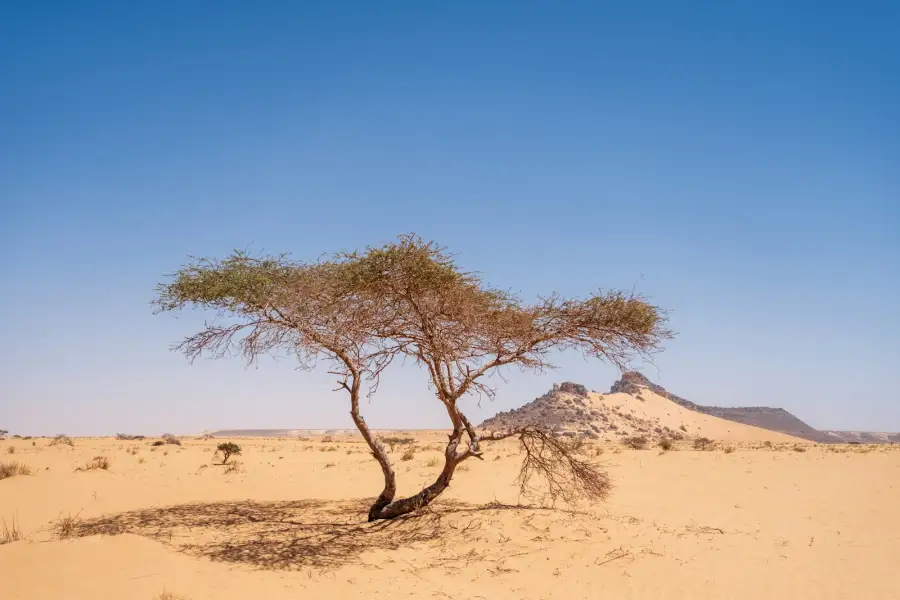
Mauritania month by month
Typical weather and what each month is like for a group trip. Every year is different – check the forecast before you go.
One of the most comfortable months for the desert, but nights can be very cold, so pack warm layers.
Still pleasant in the Adrar and on the coast, though dust-laden winds can reduce visibility at times.
Heat starts to build inland and sandstorms become more common; the coast stays milder.
Hot in the desert, and much of the travel infrastructure for visitors slows down.
Very hot inland; desert travel is tiring and few visitors go.
Extreme heat in the interior; only the Atlantic coast is moderately comfortable.
Date-harvest season in the oases draws Mauritanian families, but heat makes it hard for most visitors.
Hot and humid, with seasonal rains mainly in the south of the country.
Still very hot; rains in the south can affect roads.
Temperatures begin to fall late in the month, and migratory birds start arriving on the coast.
The visitor season usually starts, with clearer skies and comfortable desert days.
A good month for the Adrar and the Banc d'Arguin, with very cold nights in the dunes.
Great timeMixedTough (heat, rain or crowds)
Solo travel in Mauritania: the guide
Why join a group trip in Mauritania as a solo traveller
Mauritania is not a country where most people should improvise. Large areas are covered by official warnings, roads between towns are long and pass through police and military checkpoints, and the most interesting places, such as the dunes and ksour of the Adrar, are a long way from help if something goes wrong. Information online is often out of date, and conditions can change quickly.
For these reasons, travelling with an experienced local guide or a small group is usually how visitors see the country. A good local guide knows which routes are currently considered acceptable, handles checkpoint paperwork, speaks Hassaniya and French, and arranges vehicles, water, fuel and desert camps. On your own, each of these tasks can take a long time, and some, like crossing remote desert, should not be attempted alone at all.
Practical benefits for solo travellers
- Safety planning: a responsible guide or organiser will follow official advice and local information, and change plans when needed.
- Checkpoints: checkpoints are frequent and staff often ask for passport details; a guide usually prepares copies in advance.
- Shared costs: a 4x4 with a driver is the main expense of a desert trip, and it is far easier to share it with others.
- Company: long evenings in desert camps, with tea and food cooked over a fire, are better with other people.
What to ask before joining
Ask how the itinerary follows current government advice, what the plan is if advice changes, how communications work in remote areas, and whether the group shares vehicles and tents. Check whether solo travellers can share rooms or tents with another traveller of the same gender. Avoid any trip that dismisses official warnings or promises to go into areas where advice says not to travel.
Best time to visit Mauritania
The best time to visit Mauritania is usually from November to February. This is when the desert is coolest, with warm days and cold nights, and when most of the local guides and auberges that serve visitors are active. Outside this window, heat makes desert travel very hard.
Winter: the travel season
From November to February, daytime temperatures in the Adrar region are often around 25–30°C, but nights in the dunes can drop sharply, sometimes close to freezing. This is the season for camel treks, desert drives and visits to old towns such as Chinguetti and Ouadane, where conditions allow. On the coast, the Banc d'Arguin hosts very large numbers of migratory birds through the northern winter.
Spring winds
From around February and into spring, dusty winds become more frequent. Sandstorms can reduce visibility, delay travel and make camping uncomfortable. A scarf or cheche to cover your face is essential.
Summer heat
From April to October, inland temperatures often reach or exceed 40°C. Few visitors travel at this time. July and August are the season of the guetna, the date harvest, when many Mauritanian families go to the oases of the Adrar, but the heat is extreme. The south of the country receives seasonal rain in summer.
Ramadan and holidays
Mauritania is an Islamic Republic and Ramadan affects daily life strongly. During Ramadan, eating, drinking and smoking in public during daylight should be avoided, and services can slow down. Ramadan moves about 11 days earlier each year; in 2027 it is expected to fall mostly in February and early March. Eid holidays are also busy times for domestic travel.
Whatever month you choose, the season matters less than the security situation. Check current official advice before you fix dates, and keep plans flexible.
What to pack for Mauritania
Your Mauritania packing list needs to cover sun, sand, cold nights and modest dress. Facilities outside Nouakchott and Nouadhibou are basic, so bring the essentials you rely on.
Clothing
- Loose, long-sleeved tops and long trousers or long skirts. Modest clothing is expected for everyone and especially important for women.
- A large scarf or cheche to protect your face from sun and sand. Women will find a scarf useful for covering their hair in villages and at religious sites.
- A warm jacket, fleece and hat for desert nights, which can be very cold in winter.
- Comfortable closed shoes for rocky ground and sandals for camp.
For the desert
Bring a good sleeping bag if you will camp in the dunes, as nights in December and January can be close to freezing. Sunglasses with good protection, high-factor sunscreen and lip balm are essential. A head torch is useful in camps and in towns with unreliable electricity. Dust gets everywhere, so protect cameras and phones in sealed bags.
Documents and practical items
- Several photocopies of your passport photo page and visa. Checkpoints often ask for passport details, and many travellers carry prepared copies.
- Cash in euros in clean notes, as card payments and ATMs are limited outside the main cities.
- A plug adapter if your devices do not use Type C or E plugs.
- A power bank, as charging can be difficult in the desert.
- Hand sanitiser, tissues and wet wipes.
- Basic medicines, stomach remedies and rehydration salts.
- Water purification tablets or a filter bottle as a back-up.
Alcohol is prohibited for Mauritanian citizens and very hard to find, so do not plan to bring or drink it.
Mauritania visa and entry requirements
Most visitors need a visa for Mauritania, including many European, UK, US, Canadian and Australian passport holders. In recent years, many nationalities have been able to obtain a visa on arrival at Nouakchott's international airport, and Mauritania has also introduced online visa procedures. These arrangements change, and they can differ between airports and land borders, so treat this only as a general picture.
What to check before you go
- Whether you can get a visa on arrival or must apply in advance, and through which official channel.
- The current visa fee and how it must be paid, often in cash.
- Passport validity: your passport should usually be valid for at least six months beyond arrival, with blank pages.
- Proof of accommodation, onward travel or an invitation, which may be requested.
Check with the Mauritanian embassy in your country and with your own government's travel advice. Use only official government websites, and be wary of unofficial sites offering visa services.
Health requirements
You may need a yellow fever vaccination certificate, depending on where you arrive from. Speak to a travel health clinic about vaccinations and malaria, which is a risk in parts of the country, particularly the south and during the rainy season.
Land borders
Mauritania shares land borders with Morocco (via the Western Sahara area), Algeria, Mali and Senegal. Some of these border areas are covered by strict official warnings, and conditions change. If you are considering overland travel, check the latest official advice and border information carefully, and never leave main roads or marked tracks, as official advice warns of landmines in some border regions.
Insurance
Travel insurance with medical evacuation cover is strongly recommended. Some insurers do not cover travel to areas where government advice warns against travel, so read your policy carefully before you book.
How much does a trip to Mauritania cost?
Daily life in Mauritania is not expensive, but travel for visitors can be, mainly because desert travel needs a 4x4, a driver, fuel and often a guide. All figures below are approximate 2026 ranges in euros for independent costs; the local currency is the Mauritanian ouguiya (MRU), and prices change, so check before you go.
Mauritania budget per day
- Low budget, around €40–60 per day: simple auberges and guesthouses, local food, shared taxis and minibuses on main roads.
- Mid-range, around €80–150 per day: more comfortable guesthouses or hotels in the cities, restaurant meals and private taxis.
- Guided desert travel: hiring a 4x4 with a driver and guide is the biggest cost and can add a lot to a daily budget, especially for one person. Sharing with a group makes a large difference.
Typical independent costs
A simple room in an auberge in Atar or Chinguetti is often around €15–35, and a hotel room in Nouakchott roughly €40–90. A plate of rice and fish or meat at a local restaurant usually costs €3–8, and a restaurant meal in the capital around €10–20. Tea is offered constantly and often free when you are a guest.
Shared taxis and minibuses on the main road between Nouakchott and Atar are cheap by visitor standards, though comfort is basic. Entry fees for sites such as the old libraries of Chinguetti are generally small. National parks such as the Banc d'Arguin charge entry fees; check the current rate locally.
Money practicalities
Mauritania is largely a cash economy. ATMs exist in Nouakchott and Nouadhibou but may not accept all foreign cards, and they are rare elsewhere. Many travellers bring euros in cash and change them at banks or official exchange offices. Count your money carefully and keep small notes for tips and small purchases. Do not rely on cards outside a few hotels in the main cities.
Is Mauritania safe for solo and female travellers?
We cannot call Mauritania safe, and no honest guide should. Government travel advice, including from the UK Foreign Office and the US State Department, advises against travel to large parts of the country, particularly the east and the areas bordering Mali, as well as remote parts of the north and other border regions. Reasons given include the risk of terrorism and kidnapping, as well as crime. The exact areas and advice levels change, so you must read the current official advice for your nationality before planning and again just before you travel.
Where visitors commonly go, if advice allows
When official advice allows, visitors most often go to Nouakchott, the coast and the Banc d'Arguin, the Adrar region around Atar, Chinguetti, Ouadane and Terjit, and sometimes Nouadhibou or parts of the iron ore train route. Even within these areas, conditions vary, and some routes may be covered by warnings. Follow the advice of your guide and local authorities, and be ready to change plans.
Practical precautions
- Travel with an experienced local guide or a small group, especially in the desert.
- Do not travel at night between towns, and avoid remote areas without reliable local knowledge.
- Expect frequent police and military checkpoints; be polite and carry passport copies.
- Register with your embassy's travel registration service if one is available.
- Keep valuables out of sight in Nouakchott, where petty theft and robberies occur.
- Check your insurance covers the areas you plan to visit.
Tips for women travelling alone
Mauritania is a very conservative society. Women travelling alone are uncommon and may attract attention and questions. Dress modestly, covering arms, legs and ideally hair in rural areas, and accept that some social spaces are mostly male. Many women find that travelling with a group or a trusted guide, and spending time with local women and families, makes the experience much easier. Agree arrangements with guides and drivers clearly before you start.
Health
Medical facilities are limited, particularly outside Nouakchott. Heat exhaustion and dehydration are real risks, so drink plenty of bottled or treated water. Malaria occurs in parts of the country. Carry a basic medical kit and make sure your insurance includes evacuation.
Getting around Mauritania
Getting around Mauritania means long distances on a few main roads, and desert tracks where a 4x4 and an experienced driver are essential. Public transport exists between major towns but is basic.
Roads and checkpoints
The main paved roads connect Nouakchott with Nouadhibou along the coast, with Atar in the Adrar, and with the south towards the Senegal River. Checkpoints are frequent. Officers usually ask for your passport details, which is why many travellers carry prepared copies, often called fiches. Allow extra time and stay patient and polite.
Shared taxis and buses
Shared taxis and minibuses run between the main towns, leaving when full from transport stations called garages. Some coach services also run on main routes such as Nouakchott to Atar or Nouadhibou. They are cheap but can be cramped and slow. Travel only in daylight, and check with your guesthouse or guide about current conditions on the route.
Desert travel
The roads and tracks beyond Atar, towards Chinguetti, Ouadane and the dunes, are often sandy or rocky. Visitors usually travel by 4x4 with a local driver, sometimes combined with camel treks. Do not attempt desert travel alone, and make sure your vehicle carries enough water, fuel and communications.
The iron ore train
The iron ore train runs between the mining area around Zouérat and the port of Nouadhibou, a journey of several hundred kilometres. It is one of the longest and heaviest trains in the world. Some travellers ride it, either in the basic passenger carriage or on top of the ore wagons. Riding on the wagons is dangerous: it is very dusty, extremely cold at night and has no safety features. Parts of the route pass through areas that may be covered by official warnings, so only consider it if current official advice allows, and only with an experienced local guide.
Flights
Domestic flights are limited and schedules change. Seasonal flights have at times served Atar, but check current information. Nouadhibou has an airport with some domestic and regional services.
Culture, etiquette and food
Mauritania sits between the Arab Maghreb and Sub-Saharan Africa, and its culture reflects both. Moorish (Beidane and Haratine) communities speak Hassaniya Arabic, while Pulaar, Soninke and Wolof speakers live mainly in the south along the Senegal River. Nomadic traditions remain important, even though many people now live in towns.
Etiquette
- Greetings are long and important. Take time over them before getting to the point.
- Use your right hand for eating, giving and receiving.
- Dress modestly at all times. Men usually wear long trousers; women should cover arms and legs and often their hair.
- Ask before photographing people, especially women, and accept a refusal. Do not photograph checkpoints, military sites or government buildings.
- Public displays of affection are not acceptable, and alcohol is prohibited for Mauritanians and very difficult to find.
- Non-Muslims generally cannot enter mosques.
Tea
Tea is at the heart of Mauritanian hospitality. Green tea with mint and plenty of sugar is prepared slowly and served in three rounds, poured from a height to make foam. Accepting tea and taking time to drink it is a sign of respect.
What to eat in Mauritania
Rice with fish is a staple, especially thieboudienne, a fish and rice dish shared with Senegal. Grilled or roasted meat, including mutton, goat and camel, is common, and méchoui, a whole roasted lamb, is served at celebrations. Couscous is popular in the north. In the desert, zrig, a drink of camel milk mixed with water and sugar, is offered to guests, and fresh dates from the Adrar oases are a highlight in season.
Culture and heritage
The ancient ksour of Chinguetti, Ouadane, Tichitt and Oualata are listed together as a UNESCO World Heritage Site, though some are in areas covered by strict official warnings. Chinguetti's family libraries keep old manuscripts on religion, science and poetry. Mauritanian music is rich, with griots called iggawen performing on the tidinit lute and the ardin harp.
Meeting other travellers in Mauritania
Mauritania receives very few foreign tourists, so you will not find the backpacker scene of Morocco or Senegal. That can be part of the appeal, but it also means a solo traveller may go days without meeting another visitor. Joining a small group is the simplest way to have company.
Where travellers meet
- Auberges in Atar and Chinguetti: the small number of guesthouses that host visitors are natural meeting points, often with shared meals.
- Desert camps: nights in the dunes, with tea and dinner around a fire, bring guests and guides together.
- Overlanders: some travellers drive between Morocco and West Africa, and you may meet them in Nouakchott or Nouadhibou campsites and guesthouses.
- Nouakchott: cafés and some hotels in the capital are used by foreign residents and visitors.
Joining a group trip
A small group trip with an experienced local guide is often the most realistic way to visit Mauritania. When comparing options, ask how the itinerary follows current government advice, how flexible it is if advice changes, how many people share vehicles and tents, and whether solo travellers can share rooms. Check what is included, such as water, meals, permits and park fees, and what is not.
Meeting Mauritanians
Hospitality is a strong tradition, and visitors are often invited for tea. Guides and drivers are usually from the region and can introduce you to life in the oases, nomadic camps and old towns. Learning a few phrases of Hassaniya or speaking some French helps greatly. Respect local customs, especially as a woman travelling alone, and follow your guide's lead about where it is appropriate to go and who to visit.
Mauritania packing list
- Loose long-sleeved tops and long trousers or long skirts
- Large scarf or cheche for sun, sand and covering hair
- Warm jacket, fleece and hat for very cold desert nights
- Warm sleeping bag for dune camping in winter
- Comfortable closed shoes for rocky ground
- Sandals for camp and guesthouses
- Sunglasses with good UV protection
- High-factor sunscreen and lip balm
- Head torch for camps and power cuts
- Several photocopies of passport and visa for checkpoints
- Euros in clean cash notes
- Power bank for charging in the desert
- Sealed bags to protect cameras and phones from dust
- Water purification tablets or filter bottle
- Stomach remedies and rehydration salts
- Hand sanitiser, tissues and wet wipes
- Plug adapter if your devices do not use Type C or E plugs
The general list for any trip: solo travel packing list.
Typical costs in Mauritania
| What | Basic | Mid-range |
|---|---|---|
| Auberge or guesthouse room | €15–35 (Atar or Chinguetti auberge) | €40–90 (hotel in Nouakchott) |
| Breakfast or café meal | €2–4 | €5–10 |
| Dinner | €3–8 (local restaurant) | €10–20 (restaurant in the capital) |
| Bottled water (1.5 litres) | €0.50–1 | €1–2 |
| Shared taxi or bus between towns | €8–20 (e.g. Nouakchott–Atar) | €20–40 (more comfortable coach where available) |
| City taxi ride | €1–3 (shared) | €5–15 (private, longer trips) |
| Site or library entry | €1–5 | €5–10 (with a local guide's explanation) |
| 4x4 with driver for the desert | Not usually possible on a low budget | The main cost of a desert trip – far cheaper when shared |
Approximate prices for 2026 in euros. Prices change – check before you go. More: how to budget a solo trip.
Mauritania itineraries: 5, 7, 10 and 14 days
Routes that work for a first visit – on your own or as the shape of a group trip.
Mauritania in 5 days: Nouakchott and the coast
Nouakchott – Banc d'Arguin – Nouakchott (if official advice allows)
- Day 1Arrive in Nouakchott
Rest after your flight and, with your guide, check the latest local information on routes.
- Day 2Nouakchott
Visit the fishing beach in the late afternoon, when brightly painted pirogues land their catch, and the central markets.
- Days 3–4Banc d'Arguin
If advice allows, travel with a guide to the national park for birdlife, Imraguen fishing villages and wide empty beaches.
- Day 5Return and departure
Drive back to Nouakchott in daylight for your flight.
Mauritania in 7 days: Adrar desert and Chinguetti
Nouakchott – Atar – Terjit – Chinguetti – Atar (if official advice allows)
- Day 1Arrive in Nouakchott
Meet your guide or group and prepare passport copies for checkpoints.
- Day 2Drive to Atar
Travel north in daylight to Atar, the main town of the Adrar region.
- Day 3Terjit oasis
Visit the palm-filled gorge and springs of Terjit, a favourite stop for travellers and locals.
- Days 4–5Chinguetti and the dunes
Explore the old town and its manuscript libraries, then spend a night camping in the nearby dunes.
- Day 6Back to Atar
Return to Atar through the rocky passes of the Adrar plateau.
- Day 7Return to Nouakchott
Drive back to the capital in daylight for your onward journey.
Mauritania in 10 days: Adrar, Ouadane and the coast
Nouakchott – Atar – Chinguetti – Ouadane – Atar – Nouakchott – Banc d'Arguin (if official advice allows)
- Days 1–2Nouakchott to Atar
Arrive, meet your guide and travel north to the Adrar region.
- Days 3–4Chinguetti
Spend time in the old town, its libraries and the surrounding dunes.
- Days 5–6Ouadane
If routes are considered acceptable, continue by 4x4 to the ancient stone town of Ouadane at the edge of the plateau.
- Day 7Terjit and Atar
Return via the Terjit oasis and rest in Atar.
- Days 8–9Banc d'Arguin
Head to the coast for birdwatching and fishing villages in the national park.
- Day 10Nouakchott
Return to the capital for your flight.
Mauritania in 2 weeks: desert, coast and Nouadhibou
Nouakchott – Atar – Chinguetti – Ouadane – Atar – Nouadhibou – Banc d'Arguin – Nouakchott (if official advice allows)
- Days 1–2Nouakchott
Arrive, rest and explore the fishing beach and markets with your guide.
- Days 3–4Atar and Terjit
Drive to the Adrar and visit the Terjit oasis.
- Days 5–7Chinguetti and the dunes
Combine the old town with a short camel trek or 4x4 trip and nights in desert camps.
- Days 8–9Ouadane
Visit the ruined and living quarters of Ouadane, if routes are considered acceptable at the time.
- Days 10–11Nouadhibou
Travel to the northern port town for Cap Blanc and the coast; some travellers use part of this time for the iron ore train, only if official advice allows.
- Days 12–13Banc d'Arguin
Head south along the coast to the national park for birds and quiet beaches.
- Day 14Nouakchott
Return to the capital in daylight for your flight.
Where to go in Mauritania
The capital and main arrival point, known for its busy fishing beach, markets and as the base for organising trips.
The main town of the Adrar region and the usual gateway to Chinguetti, Terjit and the dunes, if official advice allows.
A historic caravan town with old family libraries of manuscripts, surrounded by dunes; part of a UNESCO-listed group of ksour.
An ancient stone town on the edge of the Adrar plateau, more remote than Chinguetti and usually visited with a guide.
A green oasis gorge with palms and springs near Atar, a popular rest stop on desert trips.
A UNESCO-listed coastal park of islands, mudflats and dunes, famous for huge numbers of wintering birds and Imraguen fishing villages.
The northern port and end of the iron ore line, near the Cap Blanc peninsula and the coast.
Group trips in Mauritania for solo travellers
We have no confirmed group departure in Mauritania yet. We only list real dates.
Host your own group trip to MauritaniaHow to choose a group tripSingle supplement explained
Solo travel in Mauritania: questions
Is Mauritania safe for tourists?
Mauritania cannot be called safe. Government travel advice, including from the UK and US, advises against travel to large parts of the country, especially the east, border areas and remote parts of the north. Read the current official advice before planning, and if it allows travel to the areas you want to visit, go with an experienced local guide or group.
Is Mauritania good for solo travel?
Mauritania is rewarding for experienced travellers, but it is not an easy or independent solo destination. Most visitors travel with a local guide or a small group because of official warnings, checkpoints and the remoteness of the desert.
Can women travel alone in Mauritania?
Some women do, but it is a very conservative country and women travelling alone are uncommon. Modest dress, clear arrangements with guides and drivers, and travelling with a group or trusted guide make it much easier. Check official advice before going.
What is the best time to visit Mauritania?
November to February is usually the best time, with warm days and cold nights in the desert. From April to October, inland temperatures are often over 40°C and desert travel is very hard.
Do I need a visa for Mauritania?
Most nationalities need a visa. Many have been able to get one on arrival at Nouakchott airport or through online procedures, but rules change. Check the Mauritanian embassy and your government's travel advice before you travel.
Can I visit Chinguetti?
Chinguetti in the Adrar region is one of the places visitors most often go to, if current official advice allows. Travellers usually visit with a local guide from Atar, and combine it with the dunes and the Terjit oasis.
Can tourists ride the iron ore train in Mauritania?
Some travellers ride the iron ore train between the Zouérat area and Nouadhibou, but it is dangerous, very dusty and very cold at night. Parts of the route may be covered by official warnings, so only consider it if current advice allows and with an experienced local guide.
How many days do I need in Mauritania?
A week is enough to see the Adrar region around Atar and Chinguetti, if advice allows. Ten days to two weeks lets you add Ouadane, the Banc d'Arguin or Nouadhibou at a realistic pace, with daylight-only road travel.
Can I use cards in Mauritania?
Mauritania is mainly a cash economy. ATMs exist in Nouakchott and Nouadhibou but may not accept all foreign cards, so many visitors bring euros in cash and change them at banks or official exchange offices.
Can I travel from Morocco to Mauritania?
Morocco and Mauritania share a land border in the north-west, and some travellers cross overland, while others fly via Casablanca. Border and safety conditions change, so check the current official advice and border information before planning.
Mauritania for solo travellers, groups and women: more questions
Is Mauritania safe to visit as a solo traveller?
Mauritania cannot be described as safe. Government advice from countries such as the UK and US warns against travel to large parts of the country, especially the east, border areas and remote parts of the north. Before planning, read the current official advice for your nationality; if it allows travel to the areas you want to see, most visitors go with an experienced local guide or a small group.
Can a woman travel alone in Mauritania?
Some women do, but Mauritania is a very conservative country and women travelling alone are uncommon and attract attention. Modest dress covering arms, legs and often hair is expected outside the capital. Many women prefer to travel with a group or a trusted local guide, and must check official advice first.
Should I join a group or hire a guide in Mauritania?
For most visitors, yes. A local guide or small group handles checkpoints, vehicles, water and desert camps, follows current local information and can change plans if advice changes. Desert travel alone is not advisable, and sharing a 4x4 with a group also keeps costs down.
Which parts of Mauritania do tourists usually visit?
When official advice allows, visitors most often go to Nouakchott, the Adrar region around Atar, Chinguetti, Ouadane and the Terjit oasis, the Banc d'Arguin National Park, and sometimes Nouadhibou and the iron ore train route. Conditions vary even within these areas, so check current official advice and follow your guide's information.
What is the best time to visit Mauritania?
November to February is usually the best time, with warm days and cold nights in the desert. From around April to October, inland temperatures often exceed 40°C and few visitors travel. Spring brings more sandstorms.
How many days do I need for Mauritania?
A week is a realistic minimum for the Adrar region, including Atar, Terjit and Chinguetti, travelling by road in daylight. Ten days to two weeks allows Ouadane, the Banc d'Arguin or Nouadhibou without rushing. Keep extra time for checkpoints and possible changes of plan.
Can I ride the iron ore train in Mauritania?
Some travellers ride the iron ore train between the mining area around Zouérat and Nouadhibou, either in the basic passenger carriage or on the ore wagons. It is dangerous, extremely dusty and very cold at night, and parts of the route may fall within areas covered by official warnings. Only consider it if current official advice allows and with an experienced local guide.
Is Chinguetti worth visiting?
Chinguetti is one of Mauritania's highlights, a historic caravan town with family libraries of old manuscripts and dunes on its doorstep. It is part of a UNESCO-listed group of ksour. Visitors usually travel there from Atar with a local guide, if official advice allows.
Do I need a visa for Mauritania?
Most nationalities need a visa for Mauritania. Many travellers have been able to get one on arrival at Nouakchott airport or through online procedures, but arrangements change and can differ at land borders. Check the Mauritanian embassy and your own government's travel advice before you travel.
Is Mauritania expensive for solo travellers?
Daily costs such as food and simple auberges are modest, roughly €40–60 a day on a low budget (approximate, check before you go). The big cost is desert travel, which needs a 4x4, a driver and often a guide, and this is much more expensive for one person. Sharing with a small group makes a large difference; the local currency is the ouguiya (MRU).
Is Mauritania good for travellers over 50?
Mauritania can suit experienced older travellers who are comfortable with basic facilities, long drives and heat. Medical care is limited outside Nouakchott, so check your health, fitness and insurance carefully, including evacuation cover. Travelling with a small group and a guide makes the trip much more manageable.
Can I travel from Morocco to Mauritania overland?
Morocco and Mauritania share a land border in the north-west, and some overland travellers cross it on the coastal route towards Nouadhibou. Border procedures and safety conditions change, and official advice warns about landmines in some border areas, so stay on the main road. Check current border and safety advice before planning.
Will I meet other travellers in Mauritania?
Mauritania receives few foreign visitors, so you may go days without meeting other travellers. Auberges in Atar and Chinguetti, desert camps and overlander campsites in Nouakchott or Nouadhibou are the main meeting places. A small group trip is the simplest way to have company.
What should I wear in Mauritania?
Dress modestly at all times: long trousers for men, and long sleeves, long trousers or skirts and often a headscarf for women. A large scarf or cheche protects against sun and sand. Bring a warm jacket for cold desert nights in winter.
Can I use cards and ATMs in Mauritania?
Mauritania is mostly a cash economy. ATMs exist in Nouakchott and Nouadhibou but may not accept all foreign cards, and they are rare elsewhere. Many travellers bring euros in cash and change them at banks or official exchange offices.
People also search for
solo travel mauritania is mauritania safe for tourists mauritania travel advice mauritania solo female travel mauritania group tour mauritania desert tour with guide chinguetti mauritania travel iron ore train mauritania best time to visit mauritania mauritania itinerary 7 days mauritania visa on arrival adrar mauritania travel banc d'arguin national park morocco to mauritania overland mauritania budget per day
Official sources to check before you go
- UK Foreign Office travel advice: Mauritania
- US State Department international travel information
- Smartraveller (Australian Government) destinations
- Government of Canada travel advice: Mauritania
Entry rules, safety advice and prices change. This guide is general information, not legal or medical advice – always check your own government's travel advice.
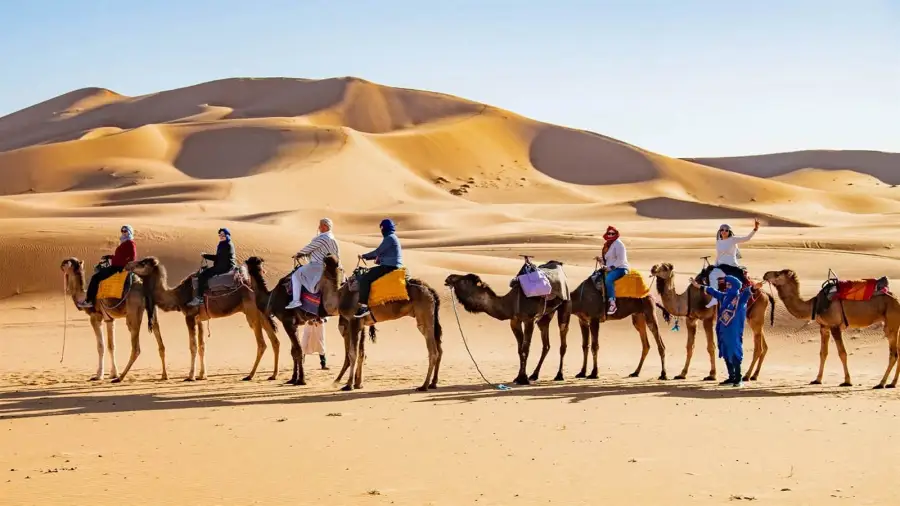
Also loved by solo travellers
Add Morocco to your list
Planning solo travel in Morocco? Best time to go, visa basics, budget per day, safety tips for women, packing list and 5 to 14-day itineraries.
More of Africa
AfricaMorocco Best: Mar–May, Sep–Nov from €35–50/day AfricaBotswana Best: May–Oct for wildlife; Jan–Apr for green-season birds and the pans from €50–80/day (camping, self-catering, buses)
 AfricaEgypt Best: Oct–Apr from €30–45/day
 AfricaNamibia Best: May–Oct (dry season) from €45–70/day (camping, excluding car hire and tours)
Travel solo. Explore together.
Thinking about Mauritania with a group?
Ask us anything about travelling solo with a group, or tell us your dates. When a real group trip matches, we will let you know – no spam, no invented offers.
- 1Tell us the country and monthOr just ask a question – packing, safety, budget.
- 2Get an honest answer by emailFrom people who plan group trips, not a robot.
- 3Join a real departure – or notYou only book when a date suits you. Book now, pay later.