Is the Serengeti good for solo travel?
The Serengeti is wonderful for solo travellers, but it works differently from a city or beach destination. You cannot simply arrive and explore: entry is by vehicle, and in practice almost every visitor goes with a licensed driver-guide. That shapes how a solo trip here is planned.
Three ways to do it
- Private safari: just you, a guide and a vehicle. You choose the pace, but you cover the full cost of the vehicle and guide alone.
- Shared safari: you join other travellers in one vehicle on a fixed route and dates. A popular choice for solo travellers who want to share costs.
- Small group trip: a planned journey with the same group throughout, often combining the safari with Zanzibar or Kilimanjaro.
Why sharing works well here
Days on safari are long, starting early and ending when the light fades. Evenings in camps are spent around a fire or at dinner, and many camps are unfenced, so you stay near the main area after dark. With others, you share the excitement of a sighting, swap photos and have company at meals. More people in the vehicle also means more eyes spotting animals.
Solo travellers can still find quiet moments: early mornings watching the plains from your tent, an afternoon rest in camp, or a walk on the crater rim. The key is choosing the format that suits you.
Things to do in the Serengeti and Ngorongoro as a solo traveller
Most of what you do here is in a vehicle with your guide, but there is more variety than many people expect.
Game drives
- Early morning drives: the best time for predators, when lions and cheetahs are active and the light is golden.
- Full-day drives with a picnic: useful for reaching remote areas or following the herds.
- Ngorongoro Crater day: a descent onto the crater floor to see a wide range of animals in one place, from lions and hyenas to elephants and flamingos.
Other experiences
- Hot air balloon flight: sunrise flights run over parts of the Serengeti, usually followed by breakfast on the plains. They are booked separately, so ask in advance.
- Walks: in some areas, including the Ngorongoro highlands and certain zones near the Serengeti, short guided walks with an armed ranger are possible. Check what is allowed where you stay.
- Olduvai Gorge: a short stop to learn about human origins at the museum and viewpoint.
- Maasai culture: the Ngorongoro Conservation Area is home to Maasai communities. If you visit a village, ask how the visit benefits the community and always ask before taking photos.
Solo tips
Bring a notebook or app to record sightings, ask your guide about animal behaviour and birds, and use the quiet hours in camp to rest. Binoculars of your own make a real difference when sharing a vehicle.
Where to stay in the Serengeti as a solo traveller
Accommodation on safari ranges from simple public campsites to permanent tented camps and lodges. Where you stay depends on the season, your comfort level and whether you are travelling with a group.
Areas of the Serengeti
- Central (Seronera): good wildlife all year and many places to stay. The best choice for a short safari.
- South (Ndutu area): best around December to March when the herds are there, with many seasonal camps.
- North (Mara River area): best around July to October, remote and far from Arusha, often reached by light aircraft.
- West (Grumeti area): quieter, best around May to July.
Ngorongoro
Many travellers stay on the crater rim, where it is cool and close to the descent road, or in Karatu, a farming town about half an hour from the gate with a wider range of places to stay.
Types of stays
- Public campsites: basic, with shared facilities. Usually part of budget camping safaris.
- Tented camps: canvas tents with beds and bathrooms, often unfenced, with shared meals.
- Lodges: solid buildings, more facilities and often fenced grounds.
Tips for solo travellers
Ask whether a single tent or room carries an extra charge, or whether you can share with another solo traveller of the same gender. In unfenced camps, always ask for an escort to and from your tent after dark.
Is the Serengeti safe for solo female travellers?
The Serengeti and Ngorongoro are generally very safe from crime, because you spend nearly all your time with a guide, in a vehicle or in a staffed camp. The main risks are related to wildlife, the roads and health, and following a few rules keeps them low.
Wildlife rules
- Stay inside the vehicle in the parks unless your guide says you can get out at a marked point.
- Do not stand up through the roof near elephants or lions if your guide asks you to sit down, and never shout or make sudden movements.
- In unfenced camps, do not walk alone at night. Use the radio, whistle or torch signal given to you and wait for an escort.
- Keep your tent closed and do not keep food inside it.
For women travelling alone
Many women go on safari alone and feel comfortable, especially on shared or group trips. Choose operators with good reviews from solo women, ask about tent arrangements and do not hesitate to raise any concern with the camp manager. Guides and camp staff are usually professional and protective of guests.
Roads and health
Roads to and within the parks are long, rough and dusty, and a full day of driving is tiring. Bring motion sickness tablets if you need them. Malaria is present in the lower areas, so ask a travel clinic about prevention, and use repellent at dusk. The crater rim is high and cold at night. Check your government's travel advice before you go and make sure your insurance covers medical evacuation.
Getting to and around the Serengeti and Ngorongoro
The Serengeti and Ngorongoro are reached from Arusha, the gateway town of the northern safari circuit. The route usually passes Lake Manyara and Karatu, climbs into the Ngorongoro highlands and then descends to the Serengeti plains.
By road
The drive from Arusha to the central Serengeti takes most of a day, often seven to nine hours including stops and slow driving inside the conservation area. Roads beyond Karatu are mostly unpaved and very bumpy. Most safaris split the journey with a night near Karatu or the crater.
By air
Light aircraft fly from Arusha and Kilimanjaro to airstrips in the Serengeti, such as Seronera in the centre and others in the north and south. Flying saves time, especially for the remote north, but luggage limits are strict, usually soft bags only, so pack light.
Inside the parks
- Safari vehicles: 4x4s with pop-up roofs, driven by your guide. There is no public transport.
- Self-drive: technically possible but uncommon and difficult for a solo traveller, with rough tracks, navigation and fee payments to manage.
- Crater descents: vehicles go down and up the crater on set roads, and time on the crater floor may be limited, so check the current rules.
Park fees in general terms
The Serengeti is managed by the Tanzania National Parks Authority and the crater by the Ngorongoro Conservation Area Authority. Both charge conservation fees, usually per person for each 24 hours, plus vehicle and sometimes concession or crater service fees. Fees are paid electronically in many cases and change from time to time, so check the official authorities and ask whether fees are included in any safari you compare.
Food on safari in the Serengeti
Eating on safari is a social experience, which suits solo travellers. In most camps and lodges, meals are served at set times and guests often eat together or at least near each other, so it is easy to share stories from the day.
What to expect
- Early breakfast: coffee or tea before a dawn game drive, then a fuller breakfast later or a packed box in the vehicle.
- Picnic lunches: on full-day drives, lunch is usually a packed meal eaten at a designated picnic site with toilets.
- Dinners: often soups, stews, grilled meat, vegetables and rice, sometimes with Tanzanian dishes such as pilau or ugali.
- Camping safaris: a cook travels with the group and prepares simple, filling meals over gas or fire.
Local tastes to look out for
Ask the kitchen whether they can serve something Tanzanian: chapati, beans in coconut sauce, mchicha (spinach-like greens) or a pot of spiced chai. In Karatu and other towns on the way, roadside stalls sell roasted maize and fresh fruit such as bananas and mangoes.
Practical tips
- Tell your operator about dietary needs well in advance; options deep in the park are limited.
- Drink bottled or filtered water and carry a refillable bottle if your camp offers refills.
- At picnic sites, keep food away from monkeys and birds, which can be bold.
- Never feed wildlife, even small animals around camp.
Side trips from the Serengeti and Ngorongoro
Classic day trips are hard in the Serengeti, because distances are big. Instead, think of side trips that you add to your safari route on the way in or out.
- Tarangire National Park: famous for elephants and baobab trees, a common first stop from Arusha.
- Lake Manyara National Park: a lakeside park with forest, birds and sometimes lions in trees, close to the main road.
- Karatu: a farming town with coffee estates, markets and village walks, a pleasant rest between game drives.
- Olduvai Gorge: an easy stop between the crater and the Serengeti for its museum and viewpoint.
- Empakaai and Olmoti craters: walking options in the Ngorongoro highlands, usually with an armed ranger.
- Lake Eyasi: a remote lake south-west of Karatu, where respectful visits to Hadzabe and Datoga communities are possible with a local guide.
- Lake Natron and Ol Doinyo Lengai: a far-flung area north-east of the crater with flamingos and an active volcano, for travellers with extra days.
Planning tips
Add side trips at the start or end of your safari to avoid long drives in the middle. Each park and conservation area has its own fees, so ask how they affect the overall plan. For culture visits, ask how communities benefit and keep photos respectful.
Serengeti itinerary: how many days in the Serengeti?
Because of the long drives, three days is the realistic minimum for the Serengeti and the Ngorongoro Crater together. Five or six days give you time to relax and follow the wildlife.
Two days (crater focus)
- Day 1: drive from Arusha via Lake Manyara or Tarangire to Karatu or the crater rim.
- Day 2: early descent into the Ngorongoro Crater, then drive back to Arusha.
Three days
- Day 1: Arusha to the central Serengeti via the Ngorongoro highlands and Olduvai Gorge.
- Day 2: full day of game drives around Seronera.
- Day 3: drive back east, descend into the crater and return to Karatu or Arusha.
Five days
- Day 1: Arusha to Tarangire for elephants and baobabs.
- Day 2: drive to the Serengeti, with an afternoon game drive.
- Day 3: full day in the Serengeti, following where the herds are that season.
- Day 4: morning drive, then on to the crater rim.
- Day 5: crater floor at sunrise, then back to Arusha or fly to Zanzibar.
In the migration seasons, ask your guide to adapt the route to where the herds are, and consider a flight one way to avoid repeating the long drive.
Serengeti group tours for solo travellers
A group or shared safari is the way most solo travellers see the Serengeti and the Ngorongoro Crater. You share the vehicle and guide, eat together in camps and have company for the long days on the road.
What to check before you join
- Vehicle size: how many people share one vehicle, and whether everyone has a window seat and roof access.
- Route and days: how many full days you spend in the Serengeti itself, not just on the road.
- Accommodation: camping, tented camps or lodges, and whether you can share a tent with another solo traveller or have your own.
- Fees and inclusions: whether park and conservation fees are included, as they are a large part of the total cost.
- Guide quality: look for experienced, licensed guides and recent reviews that mention them.
- Group style: some trips focus on photography, some on the migration, some on women travelling together.
Mixing group and solo time
Many solo travellers join a group for the safari, then continue alone to Zanzibar or stay on in Arusha. Others do the reverse, climbing Kilimanjaro with one group before joining another for the parks. Planning the safari part as a shared experience gives you the social side and the wildlife expertise of a guide, while leaving room for independent travel afterwards.
Serengeti and Ngorongoro for solo travellers: questions
Can I go to the Serengeti alone?
Yes, but not on foot or by public transport. You need a vehicle and, in practice, a licensed guide. Many solo travellers join a shared or small group safari, while others book a private safari and cover the vehicle cost alone.
How many days do you need in the Serengeti?
Two full days in the park is a good minimum, which usually means a safari of at least three or four days from Arusha. Five or six days gives a more relaxed pace and time for the Ngorongoro Crater too.
Is the Ngorongoro Crater worth visiting?
For most visitors, yes. The crater floor holds a remarkable mix of wildlife within a small area, and it is one of the best places in Tanzania to have a chance of seeing black rhino. It can be busy, so an early start helps.
What is the difference between the Serengeti and the Ngorongoro Crater?
The Serengeti is a vast national park of open plains where the herds migrate. The Ngorongoro Crater is part of a separate conservation area, a huge volcanic caldera where many animals live all year. Most safaris visit both.
How do park fees work in the Serengeti?
Fees are charged by the park authorities, usually per person for each 24 hours, with extra fees for vehicles, camping or the crater descent. They change from time to time and are a large part of any safari's cost, so check the current fees and whether they are included.
Is a shared safari or a private safari better for solo travellers?
A shared safari splits the vehicle and guide cost and gives you company. A private safari offers flexibility and quieter game drives but costs more for one person. Your choice depends on your budget and how much social time you want.
When can I see river crossings in the Serengeti?
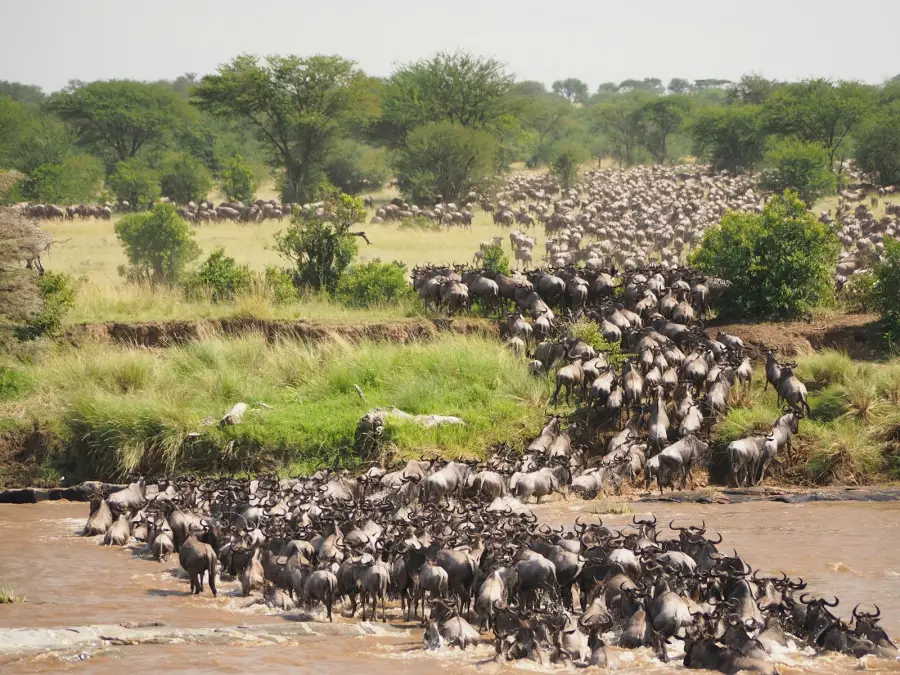
River crossings on the Mara River in the northern Serengeti often happen around July to October, but they depend on the herds and the weather. You might wait hours or see none at all, so think of a crossing as a bonus.
Is it cold in the Ngorongoro Crater?
The crater rim is high and can be cold, especially early in the morning and at night, sometimes around 5–10°C. Bring a fleece or warm jacket even if the plains feel hot during the day.
Are Serengeti camps safe at night?
Yes, as long as you follow the rules. Many camps are unfenced, so animals can walk through. Stay in your tent after dark and use the signal provided to call an escort if you need to move around.
Can I do a hot air balloon flight in the Serengeti?
Yes, balloon flights operate at sunrise over parts of the park and are usually followed by breakfast in the bush. They are booked separately from most safaris, often well in advance, so ask before you travel.
Is a Serengeti safari good for older solo travellers?
Yes, many travellers in their 50s, 60s and beyond enjoy Serengeti safaris. The main challenge is long, bumpy drives, so consider flying one way, choosing comfortable accommodation and checking how many hours you spend on the road each day.
What should I bring on a Serengeti safari?
Neutral-coloured clothes, a warm layer for early drives and the crater rim, a hat, sunglasses, a scarf for dust, binoculars and a camera with a zoom lens. Pack in a soft bag, especially if you fly to the parks.
People also search for
solo travel Serengeti solo traveling Serengeti travel to the Serengeti Serengeti solo female travel is the Serengeti safe for solo female travellers things to do in the Serengeti alone where to stay in the Serengeti as a solo traveller how many days in the Serengeti Serengeti itinerary 3 days best time to visit the Serengeti Serengeti group tour for solo travellers Ngorongoro Crater solo travel